
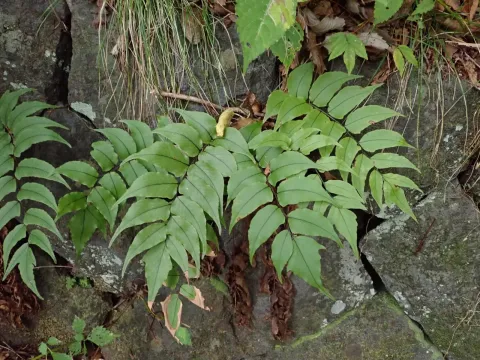
Cyrtomium clivicola
Cyrtomium clivicola
Cyrtomium clivicola is a perennial fern species belonging to the Dryopteridaceae family. Originating from the rocky outcrops and temperate forests of East Asia, this plant has evolved to thrive in specialized microclimates where soil nutrients might be limited but moisture is consistent.
What the section contains
Cyrtomium clivicola
Botanically, it is known for its leathery, dark green fronds that are highly resistant to dehydration, setting it apart from many other shade-loving ferns. The leaflets are typically serrated, creating an attractive structural appearance suitable for both rock gardens and indoor pots.
Regarding climatic requirements, this fern prefers moderate temperatures between 15°C and 22°C. While it is more tolerant of fluctuations than some tropical relatives, it should be protected from freezing temperatures and extreme heat drafts during the active growing season.
The substrate must be well-draining, mimicking its natural rocky habitat. A mixture of peat, leaf mold, and coarse sand provides the necessary aeration and moisture retention. Ensuring that the crown of the plant is not buried too deep is critical to prevent rot.
For optimal growth, provide indirect light or partial shade. Over-fertilization should be avoided, as this species is adapted to nutrient-poor rocky environments. A dilute, balanced fertilizer applied once every few months is usually sufficient to maintain healthy frond color and development.
Scale insects represent the most common threat to Cyrtomium clivicola. These pests appear as small, brownish bumps on the stems or the undersides of leaves and can weaken the plant by feeding on the internal fluids, causing the fronds to yellow.
Spider mites are another prevalent issue, particularly in environments with low air humidity. Their presence is indicated by fine webbing and stippling on the leaves, which can lead to significant aesthetic damage if left untreated.
Root rot is a major physiological threat often caused by overwatering or poor soil drainage. If the roots remain constantly waterlogged, fungal pathogens may enter the root tissue, causing the plant to wilt suddenly and lose its vitality.
Proactive care, such as regular misting and cleaning the leaves, helps mitigate the risk of pest infestations. If pests are detected, prompt application of appropriate horticultural oils or systemic insecticides is recommended to prevent spreading to other plants.
Monitoring the soil moisture levels is essential for long-term health. Allow the top inch of the substrate to dry out slightly between waterings, as this practice effectively deters most fungal issues associated with stagnant moisture.