
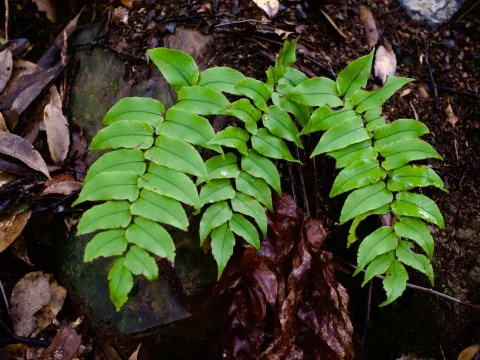
Cyrtomium fortunei
Cyrtomium fortunei
Cyrtomium fortunei is a perennial fern belonging to the Dryopteridaceae family. Originally native to East Asia, including regions in China and Japan, this species is widely recognized for its robust nature and distinctive foliage, making it a popular choice for gardeners seeking shade-loving plants.
What the section contains
Cyrtomium fortunei
Botanically, this fern is characterized by its glossy, leather-like fronds that exhibit a pinnate structure. The leaflets are serrated along the edges, and the overall plant forms a lush, symmetrical clump from a creeping rhizome. Its evergreen nature in warmer climates makes it highly valuable for year-round aesthetics.
Cultivation requires a location in full to partial shade, as exposure to harsh sunlight can lead to leaf yellowing and dehydration. The ideal soil should be well-draining, rich in organic matter, and slightly acidic. Consistent moisture is crucial, especially during the active growing season, but waterlogging should be avoided to prevent root rot.
Regarding climate, this species is noted for its hardiness, surviving temperatures well below freezing when established and properly mulched. In cooler regions, it can be grown in containers that are moved indoors or sheltered during the harshest winter months to preserve its fronds.
In landscaping, it is used extensively in woodland gardens, along shaded pathways, and in Japanese-style garden designs. Its architectural foliage provides a strong contrast to softer plants, making it a staple for shaded borders and rockeries where it adds texture and depth.
The primary threats to Cyrtomium fortunei usually stem from improper environmental conditions. Poor drainage is the most frequent cause of root decay, as stagnant water prevents root respiration and fosters fungal growth in the root zone.
Insects like scale insects and mealybugs are the most common pests. These sap-sucking insects can usually be identified by small, shell-like bumps on the undersides of the fronds. If left unmanaged, they cause the fronds to yellow, stunt, and eventually drop off.
Spider mites are another concern, particularly when the fern is grown in dry indoor conditions. Infestations are characterized by fine webbing and a mottled appearance on the leaves, which can be mitigated by increasing humidity levels around the plant.
For pest management, physical removal of insects using a damp cloth or a mild soapy solution is often sufficient for minor issues. Systemic insecticides should be used as a last resort, following label instructions strictly to protect beneficial pollinators in the garden.
Sanitation is key to preventing disease outbreaks. Always remove dead or dying fronds at the end of the season to improve air circulation within the crown. This practice significantly reduces the likelihood of leaf spots and other fungal pathogens establishing themselves on the plant.