
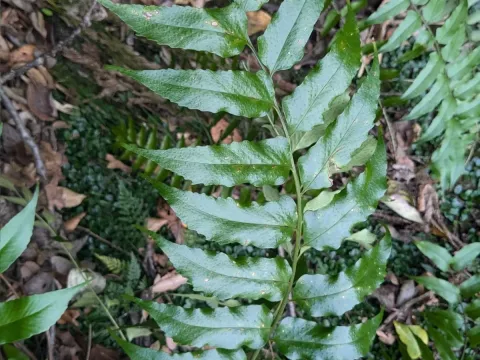
Cyrtomium devexiscapulae
Cyrtomium devexiscapulae
Cyrtomium devexiscapulae belongs to the Dryopteridaceae family and is recognized as a distinctive species of fern native to Eastern Asia. It thrives in humid, shaded forest environments, which dictates its specific needs in cultivation.
What the section contains
Cyrtomium devexiscapulae
The plant features glossy, leathery fronds that are highly resistant to pests and mechanical damage. Its architectural structure makes it a popular choice for indoor garden displays, particularly in low-light conditions where other plants might struggle.
Cultivation requirements include a well-draining soil mix high in organic matter, typically based on a blend of peat and coniferous bark. Maintaining high ambient humidity is crucial for the health of the foliage and overall vigor of the fern.
Temperature management should focus on avoiding extremes, keeping the environment between 18 and 22 degrees Celsius. During the active growth phase, balanced liquid fertilizers applied at half-strength are recommended to support leaf production.
In terms of usage, this fern is predominantly an ornamental crop used in professional interiors and private greenhouse collections, providing long-lasting green texture throughout the year.
Root rot is the most significant threat to this species, usually caused by overwatering or compacted soil that lacks proper oxygenation. Ensuring an efficient drainage system is the primary preventative measure.
Pests like scale insects and mealybugs can infest the fronds, hiding along the rachis. Early detection is essential, as these pests can rapidly sap the plant's energy, causing the foliage to yellow and drop prematurely.
Spider mites are a common issue during the winter season when indoor air is dry due to heating systems. Regular misting and proper air circulation help to mitigate this risk significantly.
Effective management involves consistent monitoring and the application of horticultural oils or systemic insecticides when infestation is confirmed. Always test on a small area before treating the entire plant.
Maintaining a clean growing environment and pruning away any dead or diseased fronds helps prevent the spread of fungal spores and keeps the specimen in peak condition.