
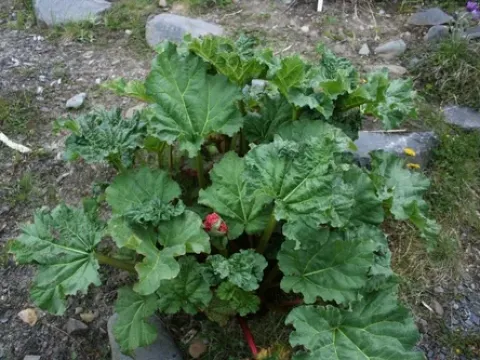
Himalayan rhubarb
Rheum australe
Himalayan rhubarb (Rheum australe) is a hardy perennial herbaceous plant belonging to the Polygonaceae family. It is distinguished by its massive root system and large, lush basal leaves with thick, succulent stalks that serve as both a food source and a medicinal ingredient.
What the section contains
Himalayan rhubarb
Originating from the high-altitude regions of the Himalayas, this species thrives in cool and temperate climates. It requires nutrient-rich, deep, and well-draining soils to support its vigorous growth during the spring and summer months.
The plant demonstrates a preference for partial shade or filtered sunlight, especially in regions with hot summers, to prevent moisture stress. Adequate hydration is critical for the development of tender stalks, as water deficiency can cause them to become tough and fibrous.
Agricultural management includes the regular application of organic matter or balanced fertilizers to replenish soil nutrients depleted by the plant's rapid biomass production. Mulching is highly recommended to regulate soil temperature and retain essential moisture around the base.
In terms of usage, Rheum australe is highly valued in traditional medicine for its roots, which contain potent bioactive compounds. Commercially, it is also utilized for its ornamental value in landscape design, making it a versatile crop for varied horticultural purposes.
Common threats to Himalayan rhubarb include root rot and crown rot, which often occur due to poor drainage or excessive water accumulation around the roots. Fungal infections, such as leaf spot, can also manifest in overly humid environments with low air circulation.
Pests such as rhubarb curculio and various aphids frequently attack the plant, targeting the succulent stalks and leaf veins. Slugs and snails are particularly problematic during the early growing season, as they feed on young, emerging foliage.
Integrated pest management strategies involve removing infected plant material promptly to prevent the spread of pathogens. Maintaining clean fields by controlling weeds is essential to minimize the presence of alternative hosts for pests and diseases.
Cultural practices such as proper spacing between plants are crucial for ensuring adequate airflow, which significantly reduces the risk of fungal outbreaks. Monitoring the crop periodically allows for early intervention before damage reaches an economic threshold.
If chemical interventions are necessary, organic-certified biopesticides are preferred to preserve the medicinal quality of the plant. A proactive approach to soil health and field hygiene remains the most effective defense against the majority of biological threats to this species.