
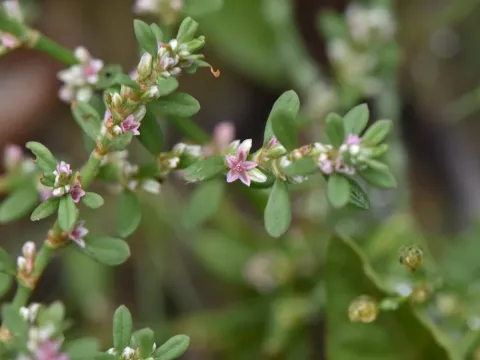
Knotweed
Polygonum L.
The sowing time for knotweed is primarily determined by the specific species and local climatic conditions. For perennial species like the Sakhalin knotweed, early spring is the preferred window for sowing.
What the section contains
 Black bindweed
Polygonum convolvulus L.
Black bindweed
Polygonum convolvulus L.
 Common knotgrass
Polygonum aviculare L.
Common knotgrass
Polygonum aviculare L.
 Dotted smartweed
Polygonum punctatum Elliott
Dotted smartweed
Polygonum punctatum Elliott
 Erect knotweed
Polygonum erectum L.
Erect knotweed
Polygonum erectum L.
 Pale persicaria
Polygonum lapathifolium L.
Pale persicaria
Polygonum lapathifolium L.
 Pennsylvania smartweed
Polygonum pensylvanicum L.
Pennsylvania smartweed
Polygonum pensylvanicum L.
 Polygonum divaricatum
 L.
Polygonum divaricatum
Polygonum divaricatum L.
 Prostrate knotweed
Polygonum arenastrum Boreau
Prostrate knotweed
Polygonum arenastrum Boreau
 Redshank
Polygonum persicaria L.
Redshank
Polygonum persicaria L.
 Senegal knotweed
Polygonum senegalense Meisn.
Senegal knotweed
Polygonum senegalense Meisn.
 Silver-sheath knotweed
Polygonum argyrocoleon Steud. ex Kunze
Silver-sheath knotweed
Polygonum argyrocoleon Steud. ex Kunze
 Water pepper
Polygonum hydropiper L.
Water pepper
Polygonum hydropiper L.
 Weyrich knotweed
Polygonum weyrichii F. Schmidt ex Maxim.
Weyrich knotweed
Polygonum weyrichii F. Schmidt ex Maxim.
Knotweed
In regions with milder climates, late autumn sowing can be performed to allow for natural stratification, which often results in more vigorous seedling growth during the following spring.
Due to the small size of the seeds, they should be sown at a shallow depth. Ensuring good soil-to-seed contact via light rolling is a critical agronomic step to improve germination rates.
For commercial production, a row spacing of 60 to 70 centimeters is standard. This provides enough space for mechanical weeding and ensures that the plants have sufficient nutrients for rapid biomass development.
Vegetative propagation is also a common method for perennial knotweed cultivars. Dividing rhizomes or rootstocks is best performed during the dormant season or just before the onset of spring growth.
Knotweed is a member of the Polygonaceae family and is recognized for its high environmental adaptability. It thrives best in fertile, well-draining soils rich in organic matter.
Water requirements are significant during the peak vegetative stage. While the plant can tolerate short dry spells, consistent moisture is necessary to achieve high biomass and yield targets.
Sunlight is a critical growth factor. The plant exhibits its best performance in open areas with full sun exposure, which is essential for both vegetative development and the accumulation of secondary metabolites.
Soil pH should ideally be neutral or slightly acidic. The plant has a robust root system, so deep, well-aerated soil profiles are preferred to allow for deep root penetration and nutrient uptake.
The plant is generally cold-hardy, allowing it to be cultivated in temperate zones. However, frost protection for young, tender shoots in early spring may be necessary in colder climates.
Knotweed is known for its impressive biomass production capacity. When grown under optimized conditions, annual yields of green matter can reach high levels, rivaling other industrial forage crops.
Nitrogen fertilization is essential for maximizing yield. Regular applications throughout the growing season stimulate rapid stem and leaf elongation, which directly correlates to the final biomass weight.
If grown for seed production, yield stability relies heavily on successful pollination. Integrating beekeeping nearby during the flowering phase can significantly improve fertilization rates and seed yields.
The longevity of a knotweed plantation is a major economic advantage. A single establishment can remain productive for several years before needing rotation or field renewal.
The quality of the harvest for medicinal or pharmaceutical purposes is measured by the concentration of specific active compounds, which requires precise timing of the harvest phase.
Fungal diseases, such as powdery mildew, are the most frequent health issues in knotweed. Improving air circulation by thinning out dense stands is a highly effective cultural control method.
Common pests like aphids and spider mites can affect leaf health. In commercial fields, regular monitoring is essential to decide if intervention with systemic insecticides or biocontrol agents is needed.
Root rot pathogens may develop in soils that remain constantly waterlogged. Proper drainage management is the first line of defense against these types of soil-borne diseases.
Weed management is most critical during the first year of establishment. Mechanical cultivation between rows is recommended until the crop canopy closes and begins to suppress weed growth naturally.
Snails and slugs can cause significant damage to young seedlings in wet weather conditions. Establishing protective borders or using mulch can help manage these populations in affected fields.
Harvest timing is critical for obtaining high-quality biomass. The ideal window is just before the full flowering stage, which ensures the best balance of nutrients and plant secondary metabolites.
For large-scale operations, mechanical harvesting with forage harvesters is the standard. This equipment shreds the material, making it suitable for immediate silage processing or dehydration.
Seed harvesting should be timed carefully to prevent loss due to natural shattering. Specialized harvesting machinery adjustments may be necessary to ensure maximum retention of the small seeds.
Post-harvest management involves rapid handling to avoid overheating of the green material. Effective cooling and proper drying are essential to prevent the degradation of quality components.
After the harvest, remaining stalks should be mowed to a moderate height. This process prepares the field for winter dormancy and encourages uniform regrowth in the following spring season.