
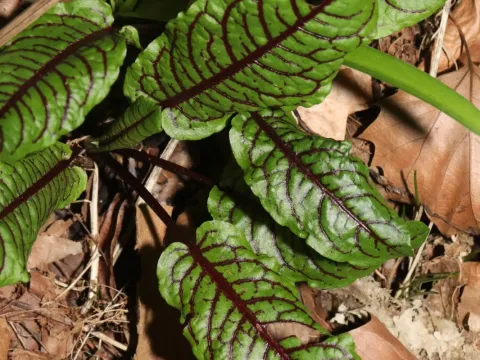
Bloodvein sorrel
Rumex sanguineus
Bloodvein sorrel (Rumex sanguineus) is a herbaceous perennial in the Polygonaceae family. It is widely recognized for its vibrant crimson veins that create a stunning contrast against dark green leaves.
What the section contains
Bloodvein sorrel
Seeds are typically sown in early spring as soon as the soil can be worked. Autumn sowing is also an option in milder climates to establish strong root systems before the next growing season.
The seeds should be planted at a shallow depth of about 1 centimeter, as they require some light for optimal germination. Proper spacing of 20-30 centimeters between rows helps reduce overcrowding.
Regular irrigation is vital during the germination phase to ensure consistent moisture levels in the seedbed. The plant is relatively quick to establish once the seedlings emerge.
Starting seeds in modules or pots under glass can provide a head start in cooler regions, allowing gardeners to transplant seedlings once the danger of frost has passed.
This crop thrives in moist, fertile, and well-drained soils. It prefers a pH level ranging from slightly acidic to neutral to ensure the best nutrient uptake for leaf development.
While it can tolerate full sun, Bloodvein sorrel often performs best in partial shade, especially in areas with scorching summer heat, which helps preserve the leaf color.
Consistent moisture is key; the plant does not handle extreme drought well, which can lead to premature bolting and tough, fibrous foliage that loses its aesthetic appeal.
Applying organic mulch or compost annually helps retain soil moisture and provides a steady supply of nutrients, supporting the continuous production of fresh, edible leaves.
The plant is highly hardy and can survive harsh winter conditions. It will go dormant in the coldest months and emerge again early in the spring, ready for harvest.
Bloodvein sorrel is primarily grown for its young, tender leaves. It serves as both a beautiful culinary herb and an ornamental addition to garden borders and vegetable patches.
Harvesting can begin when the leaves are 15 centimeters long. Frequent harvesting of the outer leaves encourages the plant to produce new, vigorous growth throughout the season.
The yield potential is quite high, with consistent production throughout the growing season if flower stalks are removed promptly to prevent the plant from going to seed.
On average, a well-managed patch can produce a substantial amount of greenery, providing several harvests per year. The plant remains productive for up to three years before needing division.
For optimal quality, focus on harvesting only the younger leaves, as mature leaves tend to become more acidic and develop a slightly bitter flavor that some consumers may dislike.
Common pests include leaf-eating beetles and aphids, which can damage the foliage. Regular monitoring is essential to detect early infestations before they cause widespread leaf damage.
Fungal diseases, such as downy mildew or rust, may occur if the planting site lacks proper airflow or if the leaves remain wet for extended periods in humid weather.
Integrated pest management, including the use of neem oil or biological controls, is recommended to manage pest pressure while keeping the leaves safe for culinary use.
Good garden hygiene, such as removing old plant debris and weeding surrounding areas, plays a crucial role in preventing the buildup of pests and diseases in the sorrel patch.
Ensuring adequate space between plants is a simple yet effective strategy to promote better air circulation and decrease the humidity around the foliage, thus reducing disease risk.
Harvesting in the early morning is recommended, as the leaves have the highest moisture content and best crispness at this time, leading to a longer post-harvest shelf life.
Use a sharp knife or garden shears to cut the outer leaves near the base of the plant. Avoid cutting into the crown, as this is the primary point for new leaf regeneration.
Post-harvest handling involves cleaning the leaves, removing any blemished sections, and cooling the product promptly to lock in freshness and maintain the vibrant color of the veins.
The leaves should be stored in a cool environment, ideally in the refrigerator, where they can maintain their quality for several days if kept in a slightly ventilated container.
While the leaves can be frozen, they are best enjoyed fresh to appreciate the unique appearance and flavor. Freezing often softens the leaf structure, which is acceptable for soups but less ideal for fresh salads.