
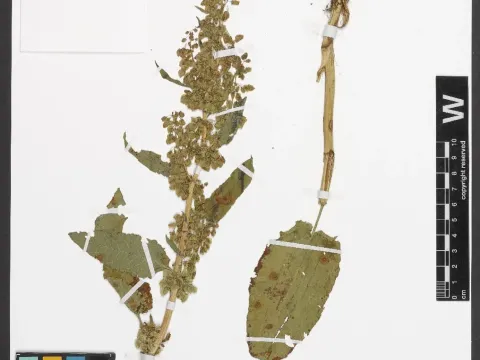
Aquitanian sorrel
Rumex aquitanicus
Aquitanian sorrel (Rumex aquitanicus) is a robust perennial herb belonging to the Polygonaceae family. This species is highly valued for its cold hardiness and its ability to produce significant vegetative biomass early in the growing season.
What the section contains
Aquitanian sorrel
The ideal time for sowing is early spring, as soon as the soil temperatures rise to 5–7 degrees Celsius. Autumn sowing is also feasible, as it allows seeds to undergo natural stratification, leading to vigorous germination when spring conditions become favorable.
In field production, seeds are typically drilled in rows spaced 20–30 cm apart. The sowing depth should be maintained at 1.5–2 cm, ensuring good seed-to-soil contact for optimal hydration and emergence.
The plant develops a deep, strong taproot system, which contributes to its resilience during dry spells by accessing moisture from deeper soil layers. This makes the crop well-adapted to various temperate climatic conditions.
During the first year, the plant focuses on establishing a rosette of leaves and developing its root system. Full-scale harvesting usually begins in the second year, once the stand is well-established and productive.
This crop thrives best in fertile loamy or sandy loam soils rich in organic matter. An optimal soil pH range of 5.5 to 7.0 is recommended to ensure nutrient availability and vigorous growth of the leaves.
Aquitanian sorrel performs well in full sun, though it exhibits good shade tolerance. However, consistent sunlight is generally preferred to maximize the nutritional value and yield of the leaves.
Nutrient management is critical, particularly nitrogen supplementation, which should be applied after each harvest to support rapid regrowth. Incorporating well-rotted compost before planting significantly boosts long-term soil fertility.
Regular irrigation is essential for maintaining leaf succulence and preventing the tissue from becoming fibrous. Water stress during peak heat can significantly diminish the quality of the marketable harvest.
Cultural practices include periodic weeding and inter-row cultivation to ensure proper aeration and minimize competition from weeds, especially during the early establishment phase of the plantation.
The most common disease affecting Aquitanian sorrel is downy mildew, which manifests as discolored spots on the leaves, especially under high-humidity conditions. Proper airflow and spacing are the primary preventative measures.
Rust disease can also occur, impacting leaf health. Reducing leaf wetness and ensuring the crop is grown in well-draining soil are key strategies to mitigate the impact of fungal pathogens.
Insect pests, such as the sorrel leaf beetle, can cause substantial damage by skeletonizing the leaves. Integrated pest management, focusing on early detection and biological control, is preferred over chemical interventions.
Crop rotation is vital to prevent the accumulation of soil-borne diseases. Avoiding monoculture for more than five years on the same plot helps maintain the ecological balance of the field.
Post-harvest sanitation, including the removal of dead foliage at the end of the season, plays a significant role in reducing the overwintering potential of various pests and fungal spores.