
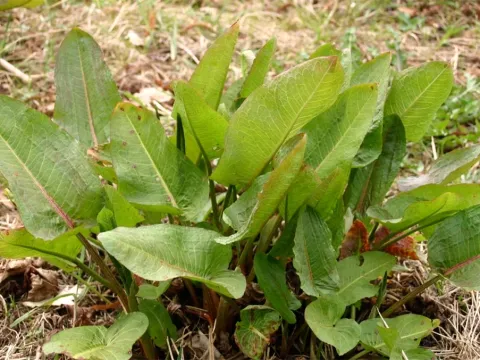
Abyssinian dock
Rumex abyssinicus
Abyssinian dock is a perennial herbaceous plant belonging to the Polygonaceae family. Seeds are sown directly into open ground in early spring, as soon as the soil warms up to 5–8 degrees Celsius.
What the section contains
Abyssinian dock
Mid-spring is considered the optimal time for sowing, as the soil maintains sufficient moisture levels for seed germination. The seeds are typically sown at a depth of 1.5–2 centimeters, ensuring stable placement and rapid emergence.
In large-scale cultivation, row sowing is practiced with row spacing up to 45–60 centimeters. This facilitates mechanical soil cultivation, weed control, and general maintenance of the plots throughout the season.
To ensure stable seedling emergence, it is important to maintain correct sowing density, as the plant has a strong root system and requires sufficient space. Thin stands fail to produce high yields, while overcrowded plots increase the risk of disease.
Abyssinian dock is characterized by high germination energy, allowing for uniform emergence within 10–14 days of sowing. The crop is tolerant to spring temperature fluctuations and quickly adapts to various growing conditions.
The plant has moderate growth requirements, preferring well-lit areas with fertile loamy soils. It is important that the soil pH remains slightly acidic or neutral to ensure proper leaf development and nutrient uptake.
The crop is highly responsive to the presence of organic fertilizers in the soil, so it is recommended to incorporate rotted manure or compost before planting. This provides the plant with essential nutrients for the long vegetation period.
Abyssinian dock requires regular but moderate watering, especially during dry periods. Excessive waterlogging can lead to root rot, so proper soil drainage is a mandatory condition for the longevity of the plantings.
The temperature regime should be moderate; the plant dislikes extreme heat, which triggers premature bolting and deteriorates the taste of the leaves. The optimal temperature for vegetation is between 18 and 22 degrees Celsius.
In regions with harsh winters, Abyssinian dock requires additional protection despite its relative cold hardiness. Mulching the rows helps retain moisture and protects the root system from freezing during snowless winters.
The yield of Abyssinian dock depends directly on the frequency of harvesting and the level of mineral nutrition. With proper cultivation techniques, it is possible to carry out 3–4 mass harvests of commercial produce from one plot per season.
The highest biomass yield is observed in the second and third years of the plant's life, when the root system reaches its maximum power. During this period, the crop can yield several kilograms of commercial leaves per square meter.
To maintain high productivity, it is recommended to apply nitrogen and potassium fertilizers after each harvest. This stimulates the active regrowth of the young leaf rosette and increases the succulence of the produce.
Timely removal of flower stalks significantly increases total yield, as the plant does not expend energy on seed formation. The appearance of stalks is a signal that vegetative growth is slowing down and leaf taste is becoming coarser.
On average, with proper care, the productivity of a plantation can remain stable for 4–5 years. After this period, it is recommended to renew the plot to prevent cultivar degradation.
The main pests for this crop are leaf-eating insects, such as dock beetles and various aphid species. They can quickly damage delicate leaves, reducing the marketability and overall yield of the crop.
Fungal diseases, including powdery mildew and rust, often occur when moisture levels are poorly managed or when ventilation in the planting is inadequate. Crowded plantings become an ideal environment for pathogen spore development.
To combat diseases, it is recommended to use preventative treatments with biological fungicides, which are safe for food consumption. It is important to practice crop rotation and avoid planting dock after other members of the buckwheat family.
Slugs and snails can cause serious damage to young plants in high-humidity conditions. To protect the plantings, mechanical barriers are used, as well as mulching rows with dry materials that hinder pest movement.
Constant monitoring of leaf health allows for the prompt identification of initial signs of infection and the implementation of measures before the massive spread of pests or pathogens. Healthy, well-fertilized plants possess natural immunity to most threats.
Harvesting begins when the leaves reach a size typical for the variety but remain tender and succulent. In the first year, harvesting is done selectively so as not to weaken the young plant and to allow it to form a strong root system.
Mass harvesting is carried out by cutting the leaves with a sharp knife at a height of 2–3 centimeters from the root neck. It is important not to damage the central bud, as it is from this point that new leaves will develop for subsequent harvest waves.
After harvesting, it is necessary to loosen the soil in the rows and apply fertilizers to ensure rapid recovery of leaf mass. During hot weather, heavy watering after harvesting is essential to prevent plant stress.
Harvested dock does not store well in its fresh form, as the leaves wilt quickly and lose their vitamin value. To preserve market quality, the produce should be immediately placed in a cool environment or refrigeration units.
In culinary applications, Abyssinian dock is used as a valuable vegetable crop due to its high content of organic acids and vitamins. It is consumed fresh in salads and is also subjected to heat treatment in soups and sauces.