
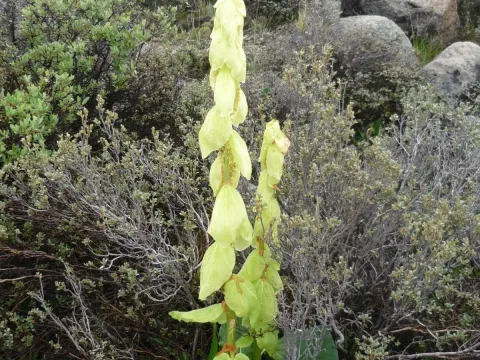
Alexandra's rhubarb
Rheum alexandrae
Alexandra's rhubarb (Rheum alexandrae) is an extraordinary perennial plant belonging to the Polygonaceae family. Unlike common garden rhubarb, this species is cultivated specifically for its architectural beauty and unique appearance.
What the section contains
Alexandra's rhubarb
Originating from the high-altitude regions of the Eastern Himalayas and Western China, this plant is naturally adapted to alpine environments. It thrives in cool, moist conditions at elevations where most other garden plants would struggle.
The plant features a basal rosette of tough, leathery leaves, but its main attraction is the dramatic flowering spike. The flowers are covered by large, imbricate, yellowish-white bracts that give the inflorescence the appearance of an ornate pagoda.
Cultivation requires well-draining, nutrient-rich soil with a slightly acidic to neutral pH. Proper drainage is the most critical factor; waterlogging during the dormant season or excessive humidity around the crown will quickly lead to root rot.
Ideally, this species should be planted in a location that receives partial shade during the heat of the day. In regions with very hot summers, maintaining cool soil temperatures is essential for the plant's survival.
Propagation is primarily achieved through seeds. Because the plant has a deep, sensitive root system, it is advisable to sow seeds directly into their permanent growing position or into deep pots to minimize root disturbance later.
Seeds require a period of cold stratification to germinate successfully. In temperate climates, sowing in the autumn allows for natural exposure to cold temperatures throughout the winter, which significantly improves emergence rates in spring.
Sow the seeds at a depth of 1–2 centimeters. Keep the substrate consistently moist but not saturated. Germination can be slow and sporadic, sometimes taking several weeks to complete as temperatures rise in the spring.
Once established, the seedlings are relatively hardy but require protection from extreme sun and competing weeds during their first growing season. Consistent attention to moisture levels is vital for juvenile plants.
Provide each mature plant with at least 80 centimeters of space. This density is necessary to ensure adequate airflow, which is crucial for preventing leaf diseases in the dense foliage rosettes.
Root rot is the most serious threat to Rheum alexandrae. It is typically caused by poorly drained soil or excessive irrigation, particularly when temperatures are low and the plant is in its dormant phase.
Fungal leaf spot and powdery mildew can occur during humid periods. Providing good air circulation and avoiding overhead watering during the late afternoon are key preventive measures for maintaining foliage health.
Pests such as aphids may infest the succulent young growth in spring. Regular inspection is recommended, and if an infestation is detected, mild horticultural soaps are usually effective for initial control.
Slugs and snails are notorious for causing aesthetic damage to the leaves. Using physical barriers like crushed shells or copper tape around the base of the plant can effectively protect the foliage from these gastropods.
Maintaining a clean garden bed by removing decaying plant material at the end of the season prevents the accumulation of pathogens and ensures a healthier environment for the plant to thrive year after year.