
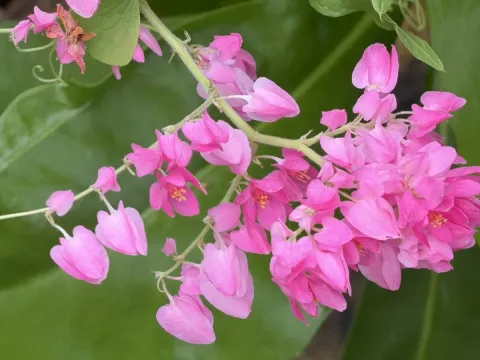
Antigonon
Antigonon
Antigonon is a genus of perennial climbing plants belonging to the Polygonaceae family. Originating from the tropical regions of the Americas, this vigorous vine is well-known for its rapid growth rate and ability to climb using specialized tendrils that allow it to cover fences, trellises, and other vertical supports.
What the section contains

Antigonon
This plant thrives in tropical and subtropical climates, requiring high levels of solar radiation to achieve maximum biomass and flower production. It is highly sensitive to frost, which limits its outdoor cultivation to frost-free zones, although it can be kept in containers in cooler climates if moved indoors during winter.
Regarding soil requirements, Antigonon prefers well-drained, fertile soils with a balanced nutrient profile. While it can adapt to various soil types, poor drainage can lead to root rot, especially during rainy seasons. Soil pH should ideally be neutral or slightly acidic for optimal nutrient uptake.
Agricultural management of Antigonon primarily involves the installation of sturdy supports, as the plants can become quite heavy when mature. Regular pruning is also recommended to manage its growth, prevent it from becoming invasive, and stimulate the development of new, nectar-rich flowering shoots.
Economically, Antigonon is highly valued in apiculture as a superior honey-producing plant. Its flowers provide a consistent source of nectar throughout the growing season, which makes it a preferred species for planting around apiaries and in agroforestry systems to support healthy pollinator populations.
The most common disease threats involve fungal infections, particularly root and stem rots caused by waterlogged soil conditions. Ensuring proper spacing between plants and maintaining adequate airflow are key cultural practices for preventing these fungal outbreaks.
Pest issues often include infestations of aphids and spider mites, which typically target the succulent new growth during dry spells. Monitoring these pests is critical for maintaining plant health, and when necessary, insecticidal soaps or biological control agents are effective for management.