
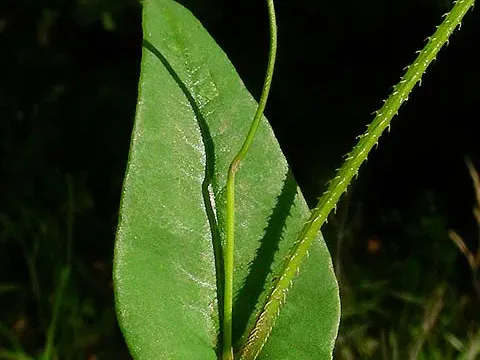
Arrow-leaved tearthumb
Persicaria sagittifolia
Arrow-leaved tearthumb is an annual herbaceous plant belonging to the Polygonaceae family. Successful cultivation requires careful timing, specifically sowing when soil temperatures reach stable levels above 12 degrees Celsius.
What the section contains
Arrow-leaved tearthumb
Seeds of this plant have specific germination requirements, including high moisture levels in the substrate. Sowing depth should be kept shallow, approximately 1–2 centimeters, to facilitate rapid sprout emergence.
In agricultural settings, precise spacing is essential to prevent overcrowding, which can hinder the plant's growth and structural development. Proper seed bed preparation ensures optimal soil contact.
The ideal planting window in temperate climates falls in late spring. Protecting the seedlings from unexpected frost is crucial, as the young growth is highly susceptible to chilling injury.
The total vegetative period extends until the onset of autumn frost. During this time, the plant focuses its energy on developing a strong root system and expansive foliage.
As a member of the buckwheat family, Persicaria sagittifolia is a true hygrophyte. It thrives in wet, marshy soils and is ideally suited for areas with poor drainage that are unsuitable for traditional crops.
Soil nutrient content is important; the plant prefers rich, organic-laden substrates. It exhibits a remarkable ability to adapt to varying soil types provided the water table remains high.
Regarding light exposure, the plant is adaptable but performs best in full to partial sun. Excessive shade can lead to leggy, weak growth patterns that reduce the overall crop quality.
The plant demonstrates a high tolerance for varying pH levels. However, slightly acidic to neutral soils often provide the most favorable environment for biomass accumulation.
Temperature management involves maintaining a moderate climate. The plant is sensitive to drought, and extreme heat accompanied by low humidity can cause rapid tissue degradation and yield loss.
Fungal pathogens represent the most significant threat to arrow-leaved tearthumb, particularly in environments with poor air circulation. Leaf spot and root rot are common in dense, over-moist stands.
Insect pests, including aphids and various foliage-feeding beetles, can cause localized damage. Mollusks are also frequent visitors that can strip leaves, especially in damp conditions.
Management strategies focus on integrated pest control. Maintaining optimal spacing between plants is the primary method to ensure airflow and reduce the likelihood of fungal outbreaks.
Chemical control should be approached with caution due to the plant's proximity to aquatic environments. Selective biological agents are preferred to maintain the ecological balance.
Regular monitoring of the crop is essential. Early identification of infected plants allows for timely intervention, effectively preventing the spread of diseases across the entire planting area.