
Pale persicaria
Polygonum lapathifolium L.
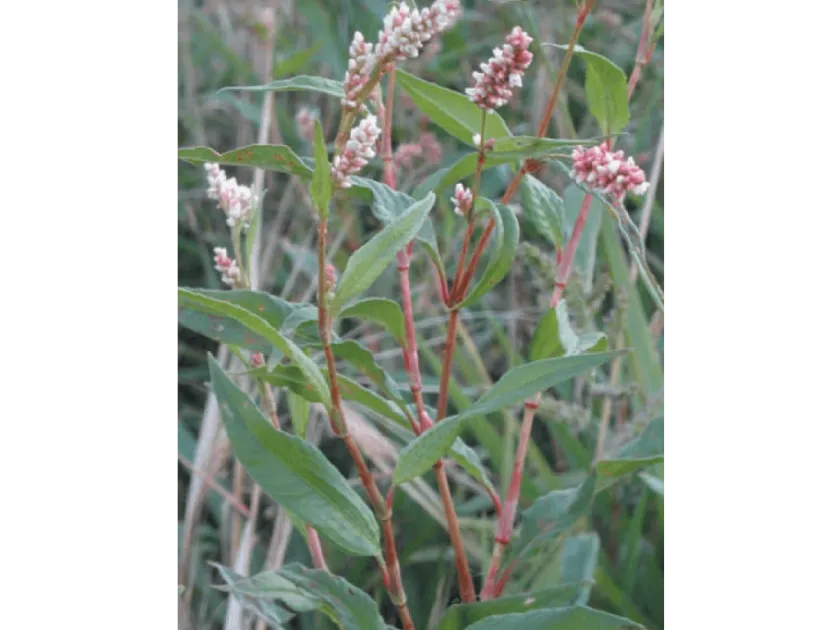
Description
Sowing dates
Seed germination typically begins in early spring when soil temperatures reach 6 to 10 degrees Celsius. This timing often overlaps with the planting season of major cereal crops, leading to immediate competition for space and nutrients.
The seeds possess the capability to germinate from depths as great as 10 cm, which significantly reduces the efficacy of standard shallow cultivation practices aimed at weed control.
Farmers are advised to use stale seedbed techniques, where the field is tilled prior to planting to encourage weed germination, followed by a secondary pass to destroy the emerged seedlings before sowing the main crop.
Crop rotation plays a critical role in managing Pale persicaria. Integrating competitive crops that provide dense ground cover can help shade out weed seedlings and restrict their overall growth throughout the season.
In intensive farming systems, precision herbicide applications during the early vegetative stage of the weed are necessary to ensure the crop establishes itself without the negative impact of competition.
Growing requirements
Pale persicaria (Polygonum lapathifolium L.) is a member of the Polygonaceae family. It is a widely distributed annual weed known for its robust growth habit and high adaptability to agricultural environments.
The plant thrives in moist, nitrogen-rich soils. It is frequently observed in low-lying areas of fields, along irrigation channels, and in damp habitats where high moisture supports its rapid development.
Botanically, it is characterized by an erect or ascending stem, often reaching heights of up to 100 cm. Its leaves are lanceolate, often marked with dark spots, and it produces dense, greenish-pink terminal flower spikes.
It prefers high fertility and shows a strong affinity for disturbed soil, making it a common pest in tilled land. Its ecological success is largely due to its ability to germinate over a prolonged period during the growing season.
The persistence of the species is guaranteed by its prolific seed production. A single mature plant can release thousands of seeds that can remain dormant in the soil for years, waiting for favorable conditions.
Main diseases and pests
Pale persicaria acts as an alternative host for several crop pests and pathogens. It can harbor viral diseases and fungal infections, such as rusts and powdery mildew, which may spread to nearby commercial fields.
Insect pests, including aphids, often utilize the dense foliage of this weed as a nursery, allowing their populations to multiply before migrating to valuable horticultural or field crops.
The competitive nature of this weed is reflected in its rapid growth rate, which can significantly deplete soil moisture and nitrogen, directly resulting in reduced crop vigor and economic losses for the producer.
Mechanical weed control, such as inter-row cultivation in corn or soybean fields, is essential to disrupt the root systems of the weed before it begins its reproductive phase.
Effective management requires a long-term strategy that includes monitoring of field edges and irrigation ditches to prevent the introduction of new seeds into the primary cropping areas.