
Water pepper
Polygonum hydropiper L.
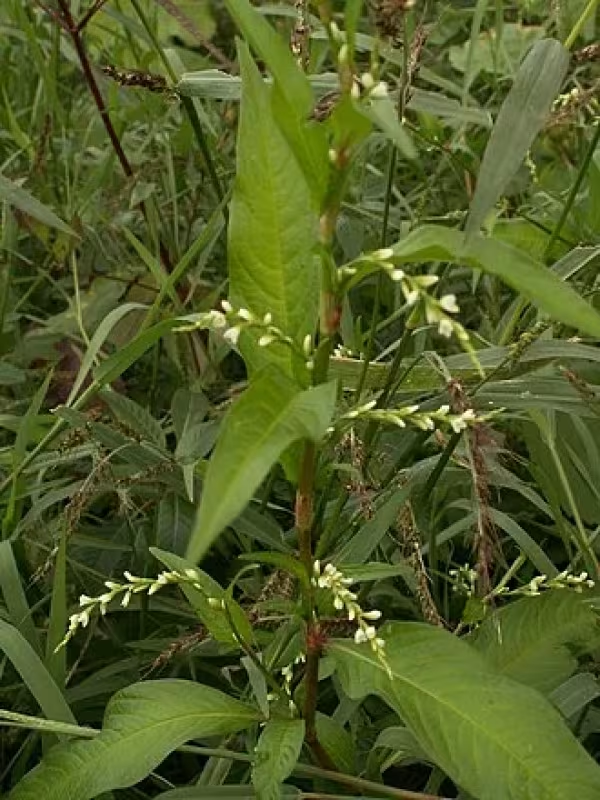
Description
Sowing dates
Water pepper is an annual plant that reproduces through seeds. In a commercial cultivation setting, the seeds are typically sown in late autumn or early spring to ensure the seeds benefit from natural stratification, which improves germination rates.
The seeds should be sown at a shallow depth of about 1 to 2 centimeters. Because they are quite small, careful placement is necessary to ensure consistent soil moisture, which is the primary driver for successful establishment during the first few weeks.
A row spacing of 45 to 60 centimeters is recommended for field cultivation. This allows for mechanical inter-row weeding, which is essential as the plant can be slow to establish and may easily be outcompeted by aggressive weeds in the early growth stages.
For optimal results, growers should use fresh, high-quality seeds as the viability of water pepper seeds declines significantly if stored in suboptimal, humid conditions. Germination generally occurs once soil temperatures reach 8–10 degrees Celsius.
Thinning is often required after the seedlings emerge. Maintaining a spacing of 10–15 centimeters between individual plants encourages lateral branching and results in a more robust and uniform harvest of aerial biomass.
Growing requirements
Belonging to the Polygonaceae family, water pepper is naturally adapted to moist, riparian environments. Its fundamental requirement for successful cultivation is consistent access to water, making it ideal for poorly drained soils or low-lying areas.
The ideal soil profile consists of fertile, loamy, or alluvial soils with a high water-holding capacity. While the plant can tolerate a variety of soil types, it performs best in soils rich in organic matter that can sustain its vigorous vegetative growth.
Climatically, the crop prefers mild, humid conditions. It is sensitive to prolonged drought, which triggers premature flowering and hardening of the stems, effectively reducing the quality and volume of the medicinal raw material produced.
Water pepper prefers areas with moderate to full sunlight exposure. While it can survive in partial shade, increased light levels, when combined with adequate moisture, contribute to higher concentrations of secondary metabolites, such as flavonoids and tannins.
The plant thrives in soil with a neutral to slightly acidic pH. If the soil is nutrient-poor, the application of balanced organic fertilizers during the pre-planting phase can significantly boost the overall yield of the green mass.
Yield
The yield of water pepper is measured by the total amount of aerial biomass harvested during the growing season. Under ideal conditions, a well-managed crop can produce multiple cuttings, depending on the length of the frost-free period.
Commercial yields typically range between 15 and 25 metric tons of fresh biomass per hectare, or approximately 3 to 5 tons of dried material. These numbers can vary significantly based on irrigation management and local fertility levels.
The peak concentration of active ingredients occurs during the flowering phase. Therefore, harvest timing is crucial to maximize the pharmaceutical value of the product rather than just the raw biomass weight.
Second cuttings are possible if the first harvest is performed correctly, leaving enough of the lower plant structure to encourage regrowth. Although the second harvest often yields less volume, it is frequently richer in specific medicinal compounds.
Post-harvest processing efficiency is a key factor in overall yield. Minimizing the time between cutting and drying, as well as maintaining proper airflow, prevents spoilage and ensures that the final product meets industrial quality standards.
Main diseases and pests
Water pepper is naturally resilient to many agricultural pests due to the presence of pungent compounds in its tissues, which act as a natural deterrent. This makes it a relatively low-input crop in terms of pesticide usage.
However, fungal diseases like powdery mildew can occur if plant density is too high or if air circulation between rows is restricted. Proper spacing and proactive weeding are the best management practices to prevent these issues.
Root rot may occur in soils that are excessively waterlogged for too long, particularly in standing water. Improving field drainage is essential to maintain plant health and prevent the development of root-borne pathogens.
Leaf-eating insects are generally not a major concern. Any minor infestations can often be managed through biological controls or by simply ensuring the plants remain healthy and vigorous through proper fertilization and moisture management.
Weeds represent the most significant threat to a newly established stand. Because the crop has a slow start, early weeding is vital to ensure that the water pepper can successfully establish a canopy and eventually outcompete unwanted vegetation.
Harvesting
Harvesting is performed during the full bloom stage. At this time, the plant contains the highest levels of rutinoside and quercetin, which are the primary compounds of interest for medicinal and industrial applications.
The top 30 to 40 centimeters of the plant are cut using specialized mowing equipment. It is important to leave enough of the base to allow for potential regrowth, while avoiding any soil-contaminated lower parts of the stem.
The harvested material must be dried as quickly as possible. Excessive moisture can lead to rapid fermentation and mold growth, which destroys the delicate medicinal properties and degrades the color of the herb.
Drying is best accomplished in shaded, well-ventilated structures where temperatures can be strictly regulated. Direct exposure to sunlight should be avoided, as UV radiation causes the degradation of pigments and active compounds.
The final product should be thoroughly dried, characterized by a brownish-green color, and possess a distinct, sharp, and peppery taste. Proper storage in a dry, cool environment is necessary to preserve the quality of the dried herb.