
Black bindweed
Polygonum convolvulus L.
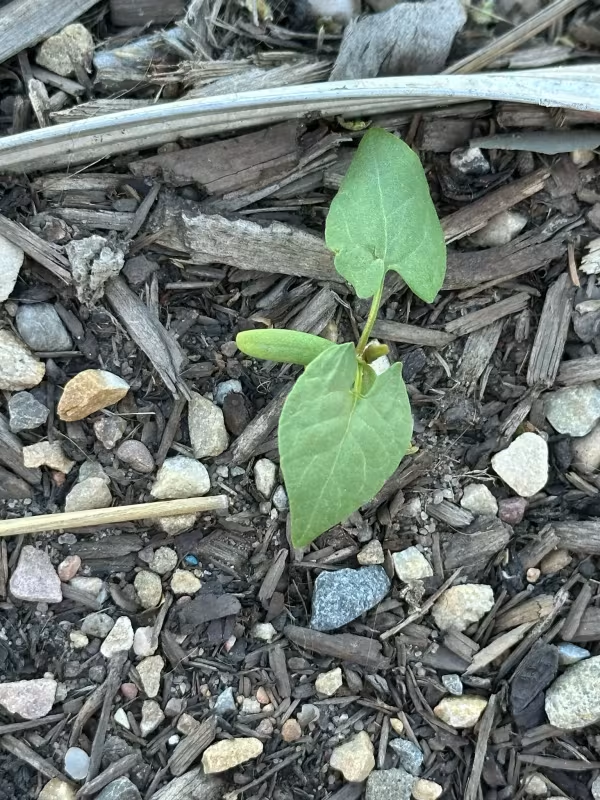
Description
Growing requirements
Black bindweed (Fallopia convolvulus, syn. Polygonum convolvulus) is an annual herbaceous weed belonging to the Polygonaceae family. It is a problematic species often found in cereal and row crop fields.
Originating from Europe and temperate Asia, this weed has become widely established globally. It thrives in various environments, showing a significant competitive advantage in field agricultural systems.
The plant features a climbing stem that can reach lengths of over one meter. It relies on crop plants for support, which often leads to lodging of the main crop and reduces overall mechanical harvest efficiency.
It prefers fertile, moist soil conditions but is highly adaptable to diverse soil types, including sandy, loamy, and clay soils. Its primary requirement for growth is open space and nutrient availability, which it competes for aggressively.
Climatically, it is a hardy species capable of surviving in various temperate zones. Germination usually begins in early spring, and the plant continues to thrive throughout the warmer months if moisture levels remain stable.
Main diseases and pests
The primary threat posed by black bindweed is direct competition for light, water, and essential nutrients. This competition significantly stunts the growth of cereal crops, leading to lower yield potential.
The weed's climbing habit causes severe lodging in wheat, barley, and other small grains. Lodged crops are harder to harvest, increasing mechanical losses and the risk of grain spoilage due to contact with soil moisture.
Black bindweed acts as a host for various pathogens and pests that can eventually migrate to the main crop. This necessitates strict control measures, including both agronomic practices and chemical intervention.
Mechanical control, such as pre-planting tillage and harrowing during the seedling stage, is effective for reducing the weed population. These methods help deplete the soil seed bank over time.
Chemical control involving selective herbicides is standard practice. Applying systemic herbicides when the weeds are in the young rosette stage is the most efficient way to manage infestations in active crop fields.