
Prostrate knotweed
Polygonum arenastrum Boreau
Description
Growing requirements
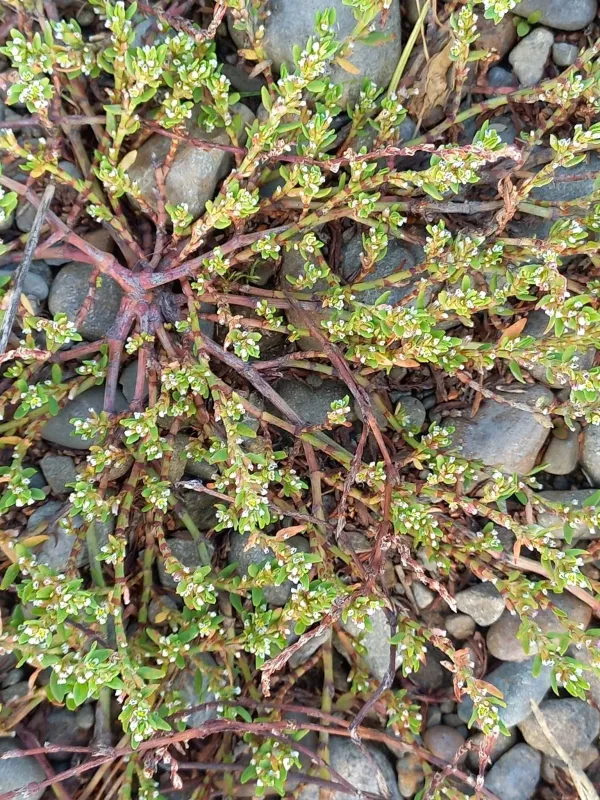
Prostrate knotweed (Polygonum arenastrum) belongs to the Polygonaceae family. It is a hardy annual plant recognized for its prostrate growth habit and resilience to soil compaction.
This species is widely distributed across temperate regions and is well-known for colonizing paths, driveways, and disturbed agricultural land due to its robust nature.
The plant thrives in nutrient-rich soils but is equally capable of establishing itself in poor, rocky conditions, showing remarkable tolerance for varying pH levels.
Knotweed is highly resistant to drought and mechanical pressure, making it a persistent presence in heavily used livestock pastures and recreational turf.
Optimal growth is observed in full sunlight, where the plant can develop a extensive root system that supports its dense, mat-forming vegetative structure.
Main diseases and pests
The plant is susceptible to several fungal diseases, including powdery mildew, especially in environments with poor air circulation and high humidity.
Common insect pests include aphids and various beetle larvae that feed on the foliage, potentially causing stress and reducing the overall quality of the forage.
In agricultural settings, prostrate knotweed is often classified as a difficult-to-control weed that competes with crops for soil moisture and nutrients.
Integrated pest management strategies are required to keep the plant in check, utilizing both crop rotation and specific herbicides to manage its growth cycles.
Regular monitoring of field edges and pathways is essential to prevent the spread of this plant into sensitive agricultural areas where it can act as a weed.