
Common knotgrass
Polygonum aviculare L.
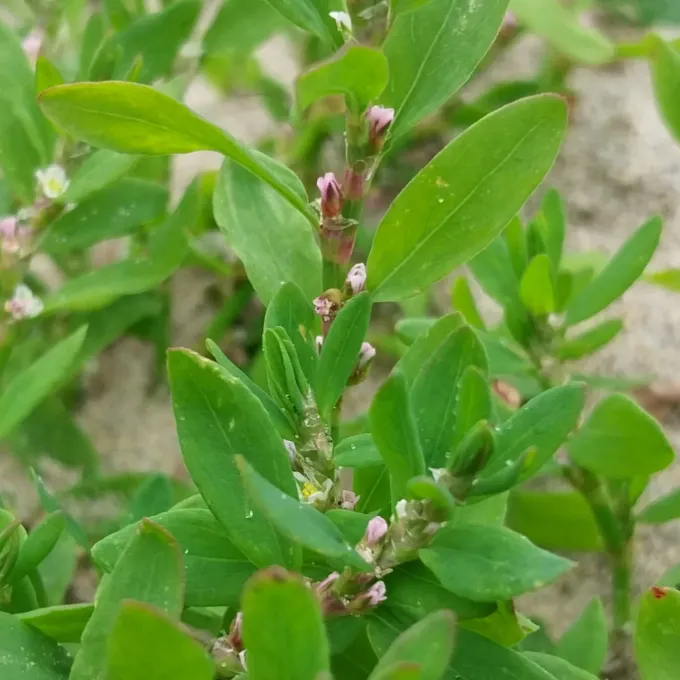
Description
Sowing dates
Common knotgrass (Polygonum aviculare) is known for its prolific seed production. A single plant can produce up to 200,000 seeds, which remain viable in the soil for several years, allowing for natural reseeding in agricultural fields.
When cultivating intentionally, seeds are sown in late autumn or early spring. The optimal sowing depth is 1 to 2 centimeters, which ensures sufficient moisture for germination while allowing the seedlings to emerge effectively.
The plant naturally regenerates in the spring as soon as soil temperatures reach approximately 3 to 5 degrees Celsius. It exhibits high germination energy, quickly establishing a dense cover in open, disturbed areas.
In grazing management, knotgrass is often favored as a resilient component of pastures. It fills gaps in the turf rapidly, providing high-quality forage that persists even in areas subjected to intensive trampling by livestock.
An important biological feature is that its seeds often pass through the digestive tracts of livestock without losing their ability to germinate, effectively distributing the plant across grazing pastures naturally.
Growing requirements
Common knotgrass belongs to the Polygonaceae family. It is a highly adaptable annual herbaceous plant that demonstrates remarkable environmental plasticity, growing in diverse climates and soil types globally.
The plant thrives in moderately moist soils but is notably tolerant of drought and soil compaction. It frequently colonizes areas with heavy traffic, such as roadsides, farm tracks, and heavily grazed pastures where other species fail.
As a light-demanding crop, knotgrass requires open areas with minimal competition for sunlight. It does not perform well under dense shade or when crowded by taller competitive weeds that block its access to solar radiation.
The plant's prostrate growth habit is a key adaptive feature. By growing close to the ground, it protects its growing points from physical damage, making it highly suitable for areas with regular human or animal traffic.
Apart from the need for clear space to grow, common knotgrass has minimal agronomic requirements, as it is naturally adapted to survive and proliferate in challenging, low-nutrient environments.
Yield
The yield of common knotgrass green matter depends significantly on soil fertility and moisture levels. Under optimal conditions, the plant can produce multiple cuts per season due to its rapid regrowth rate.
Nutritionally, knotgrass is a valuable forage source. It is rich in proteins, vitamin C, and carotenes, making it an excellent dietary supplement for poultry and livestock, especially when primary forage crops are scarce.
The plant exhibits excellent regenerative capacity. After mowing or grazing, the plant quickly produces new vegetative shoots, with a harvestable biomass returning within three to four weeks during the active growth period.
In medicinal herb production, yield is calculated based on the collection of aerial parts. The highest concentrations of flavonoids and tannins, which are the primary active compounds, are reached at the onset of the flowering phase.
Because it grows on marginal lands where traditional crops struggle, common knotgrass provides a reliable and sustainable source of biomass for farmers, even in less-than-ideal soil conditions.
Main diseases and pests
Common knotgrass is exceptionally resistant to most common crop diseases. Its physiological toughness allows it to remain largely unaffected by the typical fungal and bacterial pathogens that plague conventional agricultural crops.
In environments with excessive moisture or poor drainage, minor occurrences of powdery mildew may be observed. However, these rarely result in significant damage to the plant population or total yield loss.
Specific insect species, such as certain beetles and weevils, may feed on the foliage. While this can cause localized damage, it rarely necessitates the use of chemical pesticides in a field setting.
The most significant threat to a common knotgrass crop is the competition from taller grasses and weeds. Aggressive species can easily overtop knotgrass, starving it of the light required for photosynthesis.
In traditional field crops, knotgrass is often managed as a weed due to its rapid spread. However, in controlled production settings, it is a low-maintenance plant that requires very little intervention.
Harvesting
The harvest of medicinal knotgrass takes place during the active flowering phase, which usually spans from June to September. Careful cutting of the aerial parts is necessary to protect the roots for future growth.
When harvesting for forage, mowing should be performed as low as possible to capture the dense biomass concentrated near the ground. Specialized equipment for low-growing herbs can be utilized for this purpose.
Collected material must be dried quickly in well-ventilated areas or in dryers at temperatures not exceeding 45 degrees Celsius to preserve the essential secondary metabolites and the vibrant green color of the leaves.
Dried knotgrass should be stored in cool, dark, and dry conditions. It is essential to ensure that the final product is free from soil, stones, or foreign plant material to maintain high-quality standards.
Mechanized harvest can be challenging due to the plant's prostrate growth habit. Consequently, many agricultural producers prefer using livestock grazing as the most efficient and natural method of utilizing the knotgrass biomass.