
Silver-sheath knotweed
Polygonum argyrocoleon Steud. ex Kunze
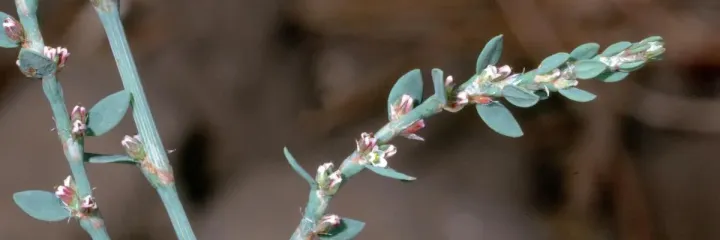
Description
Growing requirements
Silver-sheath knotweed (Polygonum argyrocoleon) is a member of the buckwheat family (Polygonaceae). While it holds botanical interest, in agriculture, it is recognized primarily as a weed species that invades disturbed areas and croplands.
Originally native to Central Asia and regions of the Caucasus, it has spread to various arid and semi-arid environments across the globe. It is highly adaptable to harsh, dry conditions where other plants might struggle to survive.
The plant is characterized by its upright, branched stem reaching heights of up to 50 cm. Its scientific name is derived from the distinct silvery, papery sheaths at the leaf nodes, which give the plant a metallic, shimmering appearance.
It thrives in open, sunny locations with well-drained, often alkaline or slightly saline soils. Its ability to tolerate low moisture levels makes it a resilient inhabitant of fallow fields and roadsides.
From a technical standpoint, the plant's life cycle is tuned to maximize seed production. Its presence in farm fields is usually a sign of poor field sanitation and requires immediate intervention to prevent long-term soil seed bank accumulation.
Main diseases and pests
The primary concern regarding this plant in agriculture is its role as a resource competitor. It consumes moisture and essential soil nutrients, directly reducing the yield potential of cultivated crops.
Furthermore, it serves as a botanical host for various pathogens. These can include viruses that affect grain development and fungal agents that compromise crop quality during the growing season.
Integrated weed management remains the most effective strategy. This involves a combination of pre-emergent herbicide application and cultural practices like crop rotation that disrupt the life cycle of the weed.
Physical removal through mechanical tillage is critical, especially when the plant is in the vegetative stage. Once seeds have matured, the plant is much harder to control due to the high volume of seed production per individual.
Preventative measures are strongly recommended, including the use of clean, certified seeds to prevent the spread of Polygonum argyrocoleon into previously uncontaminated farm areas.