
Japanese dock
Rumex japonicus
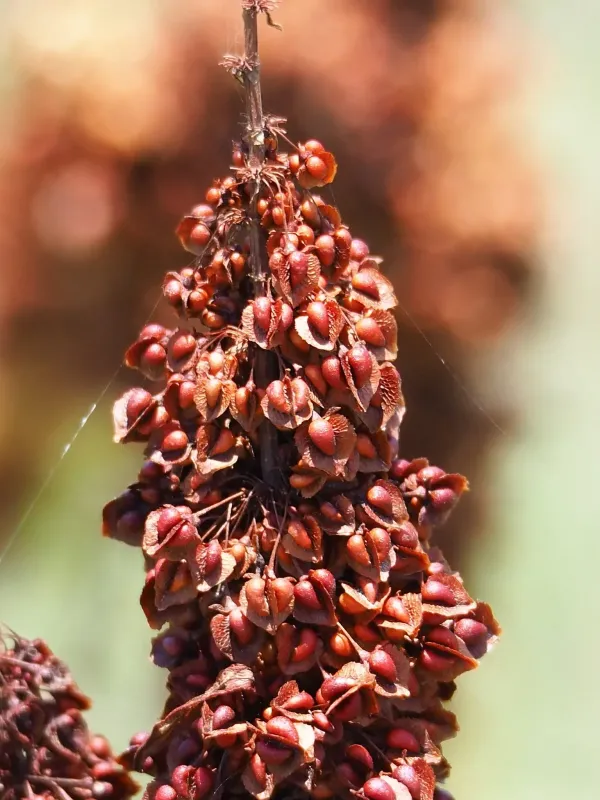
Description
Sowing dates
Japanese dock (Rumex japonicus) is a perennial herbaceous plant belonging to the Polygonaceae family. Sowing seeds in open ground is best performed in early spring, once the soil has warmed to 5-8 degrees Celsius, or in late summer, allowing the plants to establish roots before winter frosts.
The recommended sowing depth is 1-2 centimeters. When planting in rows, it is important to maintain a distance of about 25-30 centimeters between furrows, which ensures optimal nutrient access for the full development of the basal rosette of leaves.
To speed up germination, plastic covers can be used to create a greenhouse effect. Under favorable conditions, seedlings emerge within 10-14 days. Once established, plants should be thinned to leave an interval of 10-15 centimeters between them.
Propagation of Japanese dock is possible not only by seed but also vegetatively by dividing the rhizomes of mature 3-4 year old plants. This method allows for stronger specimens that enter the active growth phase more quickly than those started from seed.
In autumn, it is advisable to mulch the planting site with humus or peat. This practice protects young plants from frost in snowless winters and provides additional organic enrichment to the soil, which is essential for vigorous spring regrowth.
Growing requirements
The crop prefers fertile, sufficiently moist, but well-drained loamy or sandy soils with a neutral or slightly acidic pH. Excessive water stagnation is detrimental to the root system and promotes rot development, which can quickly kill the plants.
The plant is light-loving; however, during hot summer periods, it benefits from light shade, which keeps the leaves more tender and succulent. In a single location, Japanese dock can be productively cultivated for up to 4-5 years before needing replanting.
During the growing season, Japanese dock requires regular irrigation, especially during dry spells. A lack of moisture triggers premature bolting, which causes leaves to become tough, accumulate excess oxalic acid, and lose their culinary appeal.
To support active leaf mass production, the plant benefits from nitrogen fertilizers applied at the start of the season. However, excessive mineral nitrogen can lead to nitrate accumulation, so organic alternatives like compost or manure tea are preferred for sustainable yields.
The species exhibits high climate adaptability and frost resistance. The rhizome overwinters reliably in the ground, withstanding significant negative temperatures, and resumes growth immediately after the snow melts in the spring.
Yield
The yield of Japanese dock depends directly on the level of agronomic care and the frequency of harvesting. Over a single season, with proper irrigation and fertilization, one can harvest 3-4 full crops of green mass from a single plantation.
On average, one square meter of plantation can yield between 1.5 and 3 kilograms of marketable produce per season. Peak productivity is typically observed in the second and third years of the plant's life, when the root system is fully mature.
Harvesting is performed by cutting the leaves, approximately 10-15 centimeters long, along with their petioles. It is crucial to leave the central apical bud intact, as this is the primary source for the continued regrowth of new leaves throughout the season.
After each cutting, it is recommended to lightly loosen the soil in the rows and apply a small dose of complex mineral fertilizer to stimulate rapid recovery of the leaf apparatus and improve overall plantation longevity.
Timely removal of emerging flower stalks is a critical management practice. Flowering exhausts the plant, directing all energy reserves toward seed production rather than the vegetative growth of leaves, which is the primary objective for growers.
Main diseases and pests
Downy mildew is the most common disease, manifesting as a greyish coating on the undersides of leaves. To prevent this, growers must avoid dense planting and ensure adequate air circulation throughout the growing area.
The crop is also susceptible to rust, which occurs during periods of high humidity and heat. Any affected plant parts should be immediately removed and disposed of away from the field to prevent the spread of fungal spores across the plantation.
Common pests include the dock leaf beetle and aphids, which damage the leaf surface and make it unsuitable for human consumption. Natural deterrents like garlic or mustard infusions, or specialized biological pesticides, are effective for control.
Sawfly larvae can consume the edges of leaves, leaving characteristic holes. Regular plant inspection and manual removal of pests during early infestation stages are highly recommended to avoid the use of harsh synthetic chemical protections.
To prevent slug infestation, it is advisable to keep the rows free of weeds and maintain loose soil. This removes damp shelters for the pests and creates an environment that is unfavorable for their reproduction near the crop.
Harvesting
The first harvest usually begins 40-50 days after mass emergence, once a rosette of 5-6 healthy leaves has formed. The harvesting process should be consistent to prevent the greens from becoming overgrown and developing coarse, fibrous textures.
Harvesting is best done in the early morning when the leaves are fully hydrated and cool. Greens harvested at this time retain their market quality longer, do not wilt during transportation, and are easier to prepare for culinary use or freezing.
Harvested produce must be protected from direct sunlight. It should be quickly cooled or moved to a refrigerated room, as dock leaves lose turgor rapidly in field conditions due to intensive moisture evaporation through the leaf surface.
In industrial production, harvesting is performed mechanically using specialized harvesters for leafy greens. While this allows for rapid processing of large areas, it requires strict adherence to cutting height to ensure the long-term health of the roots.
The final harvest of the season should be completed 3-4 weeks before steady autumn frosts occur. This timing is essential to allow the plant to accumulate sufficient nutrient reserves in the rhizome to ensure successful overwintering.