
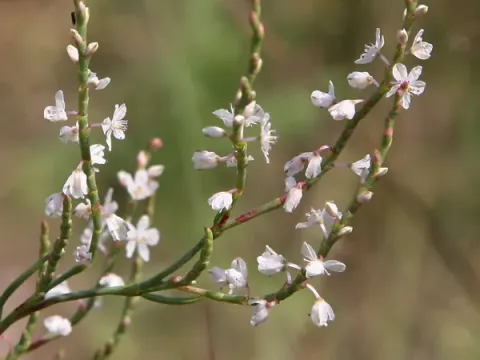
Jointweed
Polygonum articulatum
Jointweed (Polygonum articulatum), or Polygonella articulata, is an annual plant belonging to the Polygonaceae family. It is distinct for its specialized adaptation to harsh, nutrient-poor environments, making it a unique subject for botanical study.
What the section contains
Jointweed
The plant features a complex, articulated structure that allows it to thrive in sandy soils. Its root system is significantly developed, enabling the plant to anchor itself in loose substrates such as sand dunes and barren lands where typical agriculture fails.
Soil requirements for jointweed are specific: it strictly requires well-drained, sandy, or gravelly soils. It cannot tolerate heavy clay or waterlogged areas, as these conditions inhibit its natural development and increase the risk of disease.
In terms of climate, it is a heliophilous species that demands full sun exposure. It displays excellent drought tolerance, utilizing its internal biological mechanisms to conserve water even during extreme heatwaves and long dry spells.
Its primary agricultural role is centered on soil conservation and erosion control. By stabilizing loose sand, jointweed helps reclaim land that would otherwise be unproductive, contributing to sustainable land management practices.
While resilient, jointweed is susceptible to root rot, which typically occurs if the soil drainage is inadequate. Managing water levels is the most critical aspect of keeping the plant healthy and productive in a field setting.
Pest pressure is relatively low compared to traditional row crops. However, larvae of certain beetles and soil-dwelling insects may feed on the roots, causing stunted growth or total plant failure if the infestation is severe.
Foliar diseases, such as fungal rusts, can occur under specific environmental conditions, particularly when high humidity coincides with poor air circulation around the plants. Proper plant spacing is essential to mitigate this risk.
Weed competition can be a significant threat during the germination and early growth phases. Effective mechanical weeding is recommended, as the plant may be sensitive to certain broad-spectrum herbicides that can cause leaf chlorosis.
Consistent monitoring of the field is necessary. If signs of pathogen stress appear, immediate action, such as thinning the population or improving drainage, should be prioritized over chemical treatment to ensure crop health.