
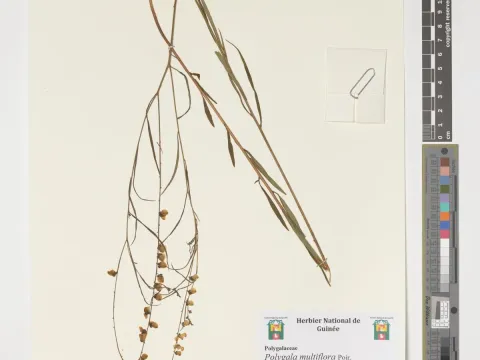
Polygala multiflora
Polygala multiflora
Sowing of Polygala multiflora seeds is mainly carried out in spring, when the soil warms up to a temperature of 10–12 degrees Celsius. To obtain uniform germination, the seeds require preliminary stratification for 30–60 days at low positive temperatures.
What the section contains
Polygala multiflora
In industrial settings, both direct sowing in open ground and seedling cultivation are practiced. The seedling method significantly saves seed material and ensures optimal plant density per hectare.
The sowing depth should not exceed 1–2 centimeters, as Polygala seeds are quite small and require shallow placement. After sowing, it is recommended to slightly compact the soil to improve capillary moisture flow to the seeds.
After emergence, thinning is performed, leaving at least 20–25 centimeters between plants. This is a critical stage for the formation of a full-fledged root system, which is the main commercial part of the crop.
Optimal sowing times in southern regions fall in late March or early April, while in more northern latitudes, work is postponed to the second half of May to avoid late frosts.
Polygala multiflora prefers well-drained, sandy loam or light loamy soils with a neutral or slightly acidic reaction. Waterlogging is disastrous for the crop as it provokes rot of the rhizomes.
The plant is photophilous, so open, well-lit areas protected from strong cold winds are chosen for establishing plantations. Lack of sunlight leads to elongated shoots and a decrease in the content of biologically active substances.
The crop is moderately demanding of moisture in the active growth phase, but it is characterized by high drought resistance at a mature age. An important agricultural technique is regular loosening of row spacing to ensure soil aeration.
Fertility requirements are average, but the application of phosphorus-potassium fertilizers in the autumn period during plowing significantly increases frost resistance and root quality. Excess nitrogen fertilizers are highly undesirable, as they stimulate green mass growth to the detriment of root system development.
For successful growth, the soil should be free of weeds, especially in the first year of vegetation, as the plant develops slowly and is sensitive to competition for nutrients.
The main danger to Polygala is fungal diseases of the root system, which occur when irrigation regimes are violated. Root rot can destroy crops in a short time under high soil humidity.
Pests such as aphids and spider mites can attack the young above-ground part of the plant during periods of drought. Biological insecticides are used to control them, which allows maintaining the environmental purity of the raw material.
Weeds are the main competitors of the crop in the initial stages of development. It is recommended to use mulching materials or regular mechanical weeding to ensure normal vegetation.
Under waterlogging conditions, gray rot may develop on the leaves, which requires immediate removal of the affected plant fragments. Prevention consists of adhering to crop rotation and optimal seeding rates.
Failure to meet soil aeration requirements leads to the development of anaerobic processes in the rhizosphere, which weakens the plant's immunity and makes it vulnerable to pathogens.
The harvest of Polygala multiflora is carried out in the second or third year of the plant's life, when the rhizome accumulates the maximum concentration of active substances. The best time is autumn, after the end of vegetation.
The roots are carefully extracted from the soil using special brackets or plows, avoiding mechanical damage that reduces the quality of the commercial raw material. Cleaning from soil residues is performed immediately after excavation.
After harvesting, the roots are thoroughly washed in running water and dried in dryers at a temperature not exceeding 50 degrees Celsius. Overheating can lead to the destruction of useful components in the raw material.
For high-quality storage, the dried raw material is packed in cloth bags or paper bags and placed in dry, well-ventilated rooms. The shelf life of properly dried roots reaches two years.
Harvesting requires caution: it is important not to leave damaged parts of the roots in the soil, as they can become a source of infection for subsequent plantings in the same crop rotation.