
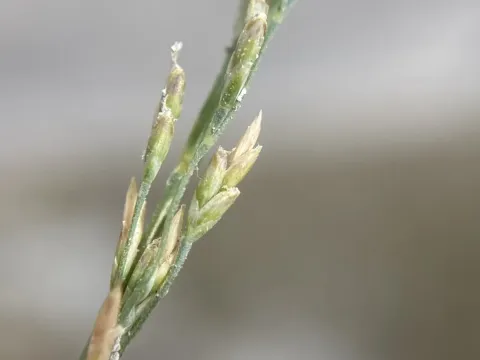
Puccinellia airoides
Puccinellia airoides
Puccinellia airoides, commonly known as alkali grass, belongs to the Poaceae family. It is a perennial grass species highly valued for its ability to thrive in saline and alkaline environments where most forage crops fail.
What the section contains
Puccinellia airoides
The optimal time for sowing is early spring when soil moisture is at its peak. Given the small size of the seeds, they should be sown shallowly, ideally at a depth of 1 to 2 cm, followed by firming the soil to ensure good seed-to-soil contact.
The seeding rate typically ranges from 8 to 12 kg per hectare depending on the site conditions. Because the seedlings are slow to establish, it is critical to select sites with minimal weed pressure or manage competing vegetation effectively during the early stages.
Alkali grass is known for its dense sod-forming habit. This makes it an excellent candidate for long-term pastures, contributing significantly to soil stabilization and the reclamation of degraded salty wetlands.
The natural range of the species covers various temperate regions. Its biological capacity to manage osmotic stress makes it a vital component in land rehabilitation projects focused on restoring productivity to salt-affected landscapes.
The primary requirement for Puccinellia airoides is adequate soil moisture. Despite its remarkable salt tolerance, the plant performs best in environments where moisture is consistently available, including flood-prone areas.
It prefers heavy-textured soils, such as clays and silty loams, which are often found in saline environments. The plant can adapt to a wide range of pH values, demonstrating robustness in both moderately alkaline and neutral conditions.
Sunlight exposure is essential for the healthy development of this grass. While it can withstand harsh winter temperatures, ensuring proper nitrogen levels in the soil can significantly boost biomass production during the growing season.
Adaptation to high-salinity soils is facilitated by the plant's physiological mechanisms for regulating ion uptake. This allows it to exclude or sequester sodium, maintaining cellular functions even in high-stress conditions.
Regular monitoring of soil salinity levels can help farmers manage the productivity of alkali grass stands. In very dry climates, supplemental irrigation during the peak growing phase may be necessary to maximize forage yield.
Forage yield for Puccinellia airoides varies between 1.5 to 3.0 tons of dry matter per hectare. The exact productivity depends heavily on soil salinity levels, water availability, and management practices.
The forage is highly palatable and nutritionally valuable, particularly during the vegetative growth phase. It serves as an excellent energy source for livestock when managed properly through rotational grazing.
Seed production is another potential use for this crop. When harvested at the right maturity stage, the seeds can provide a sustainable source for reseeding or commercial sale, though yields can fluctuate based on seasonal weather patterns.
Proper grazing management is essential for longevity. Avoiding overgrazing allows the plants to maintain vigorous root systems, which are key to survival in harsh soil conditions and ensuring regrowth after seasonal use.
Integrated management, including light fertilizer applications and controlled grazing periods, can enhance the stand's density, ultimately leading to higher forage availability throughout the season.
Common diseases affecting this species include rusts and mildews, which often occur in humid, stagnant air conditions. These fungal pathogens can reduce overall biomass and lower the quality of the fodder.
Pests such as cereal flies or grasshoppers can cause damage, especially in young stands. Integrated pest management, focusing on early detection and maintaining stand health, is the preferred approach for control.
Excessive moisture combined with poor ventilation can foster disease outbreaks. Thinning the stand or ensuring proper grazing pressure can improve airflow, effectively reducing the risk of fungal spread across the field.
While Puccinellia airoides is resilient, neglect of soil management can lead to stand decline. Overgrazing can expose the soil, potentially increasing salinity levels at the surface and making the grass more susceptible to environmental stress.
Monitoring for signs of pest damage should occur throughout the growing season. Early intervention, such as adjusting grazing cycles or mowing affected areas, is key to preserving the long-term health of the pasture.
Harvesting for hay should occur at the late boot or early flowering stage to ensure the best balance between protein content and digestibility. Harvesting too late results in lignified stems and lower nutritional value.
When harvesting for seeds, farmers should look for the characteristic brownish tint of the panicles. The seeds are very small and fragile, requiring precise machinery settings during threshing to minimize harvest losses.
Drying the harvested hay quickly is vital to prevent mold growth and preserve nutrients. Sun-curing in windrows is common, provided the weather conditions are favorable for moisture reduction.
Storage should be in a clean, dry location to prevent spoilage. Proper stacking in bales or under cover protects the fodder from environmental degradation, ensuring it remains safe for animal consumption during winter months.
Technical equipment used for harvesting should be calibrated specifically for small-seeded forage grasses. Proper calibration not only maximizes the output of high-quality seeds but also reduces costs related to waste and processing.