
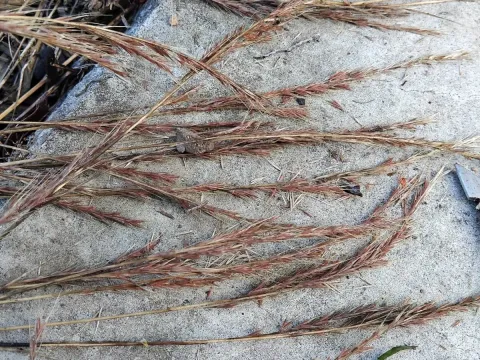
Psilurus
Psilurus
Psilurus is an annual grass whose development cycle is adapted for germination in autumn or early spring. In the natural habitat, seeds fall from the inflorescences after maturation and undergo a period of natural stratification within the soil profile.
What the section contains

Psilurus
When cultivating this species, it is critical to maintain constant substrate moisture, as the seeds are extremely sensitive to dehydration during the initial germination phase. The optimal seeding depth should not exceed 1–2 centimeters to ensure timely emergence.
Effective soil preparation is essential, requiring a fine, weed-free seedbed to allow for optimal seedling establishment. The plant shows significant tillering capacity when provided with sufficient light and adequate spatial distribution.
Standard row planting with a spacing of approximately 15 centimeters is recommended for a uniform stand. Early sowing dates are prioritized in agricultural management to allow the root system to develop fully before the onset of summer drought.
In arid environments, minimizing soil disturbance during the sowing process is important to preserve residual moisture in the upper soil layers, which is crucial for early survival.
Psilurus prefers open, sunny locations and well-drained sandy or rocky soils characteristic of Mediterranean landscapes. The plant exhibits high ecological plasticity but performs poorly in waterlogged or frequently saturated conditions.
The optimal pH range for successful growth is neutral to slightly alkaline. On heavy clay soils, the plant shows stunted development due to limited aeration of the root system, which hinders nutrient uptake.
Climate requirements include a moderately warm spring and a dry period during the seed maturation phase. Although Psilurus is a thermophilic species, it possesses sufficient adaptation to tolerate the minor frost events typical of spring in its native range.
The plant is classified as a xerophyte, allowing it to efficiently utilize limited soil water reserves. It successfully outcompetes other grass species on nutrient-poor sites due to its efficient resource allocation.
High light intensity is a mandatory condition for normal development. Shading results in stem lodging and a sharp decline in biomass production, as well as reduced quality of the harvested seed material.
The biological productivity of Psilurus is generally moderate, as it belongs to the group of smaller annual grasses. Its economic value lies not in bulk biomass yield, but in its ability to form a stable ground cover on eroded soils.
Under intensive management and with balanced nutrient application, it is possible to improve dry matter output, although its potential remains limited by its annual life cycle. Compared to perennial species, the total seasonal yield is lower.
The primary success indicator for cultivating Psilurus is seed yield. Producing high-quality seeds is the priority goal when preserving the genetic diversity of the species for research or ecological restoration projects.
Biomass productivity is closely correlated with spring precipitation levels. In favorable years, the plant forms a dense carpet that can serve as a supplemental early-season forage source for livestock.
Commercial agricultural use of Psilurus is rare, as its application is mostly restricted to specialized land restoration and soil stabilization tasks in specific geographic regions.
Psilurus can be affected by common grass pathogens, including rust fungi and powdery mildew. The risk of disease outbreaks increases significantly under dense stand conditions and high atmospheric humidity.
Pests such as cereal flies can cause damage to young seedlings, leading to reduced stand density. During the maturation phase, seeds are susceptible to attacks by various granivorous insects.
Early developmental stages are particularly vulnerable to soil-dwelling pests like wireworms, which can severely deplete emerging stands. Integrated preventive measures are essential for effective management.
Weed control is critical, as competing vegetation can serve as a reservoir for pests and diseases. Pesticide application is generally limited due to the low economic return in extensive cultivation scenarios.
Abiotic factors, such as high winds during the flowering period, can interfere with pollination and lead to significant harvest losses for seed-producing operations.
Seed harvesting is conducted during the full wax ripeness phase, when the spike-like inflorescences take on a dry, pale appearance. Prompt harvesting is necessary to prevent significant yield losses due to natural seed shattering.
When used as forage, the grass should be mown before the flowering phase, as this is when the nutritional value and digestibility are at their peak. After flowering, the stems become fibrous and less palatable to livestock.
Mechanized seed harvesting requires precise machine adjustment to prevent fine seeds from being blown away or damaged during the threshing process. Minimal drum speed is key to maintaining seed viability.
Post-harvest processing involves drying the seeds in well-ventilated areas, which is crucial for maintaining germination rates during subsequent storage. The material must be cleaned of impurities and plant residues.
Storage should be carried out in cool, dry, and rodent-proof facilities using breathable bags to ensure air circulation and prevent the growth of mold or moisture-related degradation.