
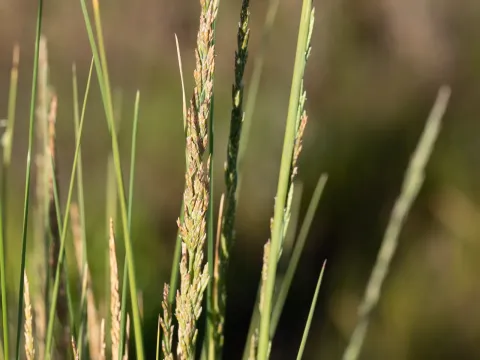
Puccinellia stricta
Puccinellia stricta
Puccinellia stricta, known commonly as a species of saltmarsh grass, belongs to the Poaceae family. This perennial grass is highly specialized for growth in saline, alkaline, or sodic soil conditions where many other forage species fail.
What the section contains
Puccinellia stricta
The plant features a robust root system adapted to saline environments, which helps in soil stabilization. Its narrow leaves and upright stems are typical of the genus, providing excellent resilience against environmental stress and moderate grazing pressure.
As a true halophyte, Puccinellia stricta is naturally equipped to handle high salt concentrations in the soil profile. It thrives in salt-affected areas, offering a sustainable solution for utilizing land that is otherwise considered marginal for agriculture.
The species requires open, sunlit areas to achieve optimal development. It is remarkably tolerant of varying moisture levels, including periods of waterlogging or drought, which are typical of its natural saline habitats.
Agronomic management should focus on site selection and initial establishment. While the plant is hardy, providing balanced soil nutrients during the early stages of growth can significantly improve the density of the forage stand.
The primary agricultural use of Puccinellia stricta is for pasture improvement and forage production on saline rangelands. It provides a reliable source of green mass, essential for supporting livestock in regions where traditional grasses cannot survive.
The nutritional profile of this grass is sufficient for cattle and sheep, making it a valuable feed source. Because it remains palatable even under salt-stressed conditions, it plays a vital role in maintaining the productivity of saline pasture ecosystems.
Yield capacity is largely determined by local site conditions, specifically the degree of salinity and water availability. Under favorable conditions, the grass forms a dense, turf-like canopy that supports frequent grazing without long-term degradation.
Beyond its value as fodder, the species serves an important ecological role in phytoremediation. Its extensive root network improves soil structure and reduces erosion risks, aiding in the long-term reclamation of salt-damaged lands.
The economic sustainability of using Puccinellia stricta is high due to its perennial nature. Once established, it requires minimal intervention, allowing for long-term land utilization with very low maintenance costs.
Puccinellia stricta exhibits strong natural resistance to many common cereal and forage crop diseases. Its physiological ability to manage high mineral concentrations in its tissues acts as a barrier to many pathogens.
Potential threats are mostly related to poor drainage management. Excessive water accumulation can promote root zone pathogens; thus, maintaining adequate soil surface drainage is essential for long-term stand health.
Insect pests rarely cause significant economic impact, as the plant's saline-rich environment is generally unattractive to many common crop-attacking insects. The grass maintains a high level of natural resilience.
During the establishment phase, weed competition poses the greatest challenge. Strategic weed control measures until the grass fully establishes its root system are recommended to prevent early stand loss.
Effective pasture management includes monitoring stocking rates to prevent overgrazing. Excessive trampling can compact the soil and damage the crown of the plants, so rotational grazing systems are highly recommended to ensure vitality.