
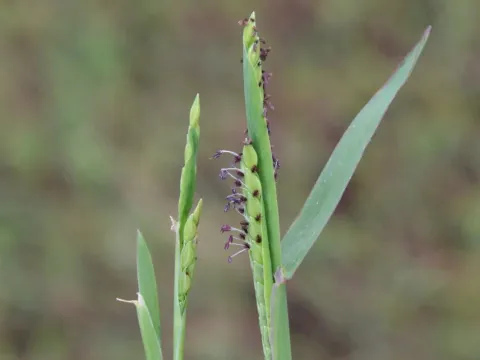
Paspalum acuminatum
Paspalum acuminatum
Paspalum acuminatum is a perennial grass species belonging to the Poaceae family. It is recognized for its robust growth habit and ability to spread through an effective rhizome system, making it suitable for establishing permanent pastures.
What the section contains
Paspalum acuminatum
Sowing should ideally occur when soil temperatures are consistently above 15 degrees Celsius to ensure rapid germination. The seeds are small, requiring careful placement to avoid burial too deep in the soil profile.
In many commercial settings, vegetative propagation using rhizome segments is preferred over seeds for more uniform establishment. This method ensures that the grass covers the area faster and competes more effectively against weeds.
Preparation of the seedbed involves fine tilling to provide a stable, moisture-retentive environment. Given the potential for the crop to fill in gaps, initial spacing between rows should be calibrated based on the desired density.
Early management is critical as the seedlings require protection from weed pressure until they become established. Maintaining consistent soil moisture during the first weeks of growth is essential for high success rates.
This species naturally thrives in environments characterized by high moisture levels and occasional flooding. It is highly adapted to poorly drained soils where other forage crops would suffer from root suffocation.
Paspalum acuminatum prefers well-structured, fertile soils but exhibits remarkable tolerance to varying pH levels. This adaptability allows it to be grown in areas that are not typically suitable for more demanding agricultural crops.
Regarding climate, the plant is heat-loving and requires a long growing season to reach its full yield potential. It does not tolerate heavy frosts, which can cause dormancy or damage to the upper biomass.
Light requirements are high, as the grass performs best under full sun. While it can survive partial shade, its biomass production is significantly higher in open, well-lit pasture landscapes.
Nutrient management is straightforward, requiring periodic applications of nitrogen and phosphorus to sustain its rapid growth. Effective fertilization is the primary driver of its high yield capacity throughout the season.
The primary threats to Paspalum acuminatum involve fungal pathogens, particularly those that thrive in humid, warm conditions. These diseases can impair the quality of the forage and reduce the overall nutritional value.
Pests that target roots and stems can cause significant damage if populations are not controlled. Regular scouting for early signs of infestation is a vital part of integrated pest management strategies.
Overgrazing poses a major threat to the long-term viability of the pasture. If the livestock removes too much foliage, the root system loses its energy reserves, making the plants susceptible to weed invasion.
Preventative measures include rotation of grazing areas to allow the grass to recover its root system. Additionally, maintaining adequate soil nutrients helps the grass naturally resist some forms of biotic stress.
- Strategic rotational grazing.
- Balanced nutrient management.
- Integrated disease and pest monitoring.