
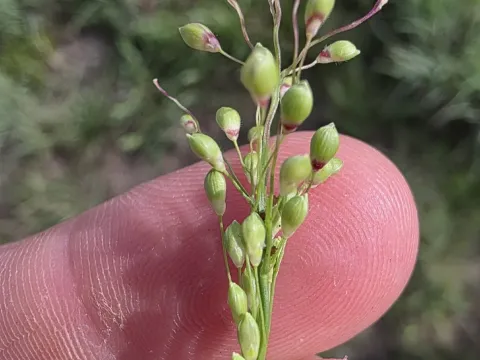
Scribner's panicum
Panicum scribnerianum
Scribner's panicum (Panicum scribnerianum) is a perennial grass species belonging to the Poaceae family. Native to the North American continent, this grass is a characteristic element of prairie ecosystems, well-adapted to surviving in diverse open landscapes.
What the section contains
Scribner's panicum
The plant demonstrates significant resilience to climate variability, particularly to periods of limited precipitation. Its physiological structure allows it to maintain growth during moderate droughts, making it a potentially resilient forage crop for temperate regions.
Soil preferences are clearly defined: Scribner's panicum thrives in well-drained soils, typically sandy or rocky substrates. It requires minimal nutrient input compared to standard agricultural cereals, though it benefits from balanced soil fertility for optimal biomass production.
Adequate sunlight is the primary requirement for successful establishment. This species exhibits poor tolerance for heavy shade, which negatively affects tiller density and root system development. Thus, it is best suited for open field cultivation.
The vegetative cycle starts in late spring, with the plant reaching its maximum height during mid-summer. The leaves are characteristically hairy, which is a defensive adaptation that reduces water loss through transpiration, allowing the plant to remain green under high heat.
Disease pressure in Panicum scribnerianum is usually low if the crop is managed correctly. However, during excessively wet seasons, fungal infections such as leaf spot may occur, which can impact the aesthetic and nutritional quality of the forage.
Insects such as grasshoppers can cause mechanical damage to the foliage. While these insects are common in native prairies, large populations can significantly reduce the potential harvest volume if not controlled during the peak feeding stages.
Root rot pathogens remain a hidden threat, especially in soils that lack proper drainage. Once a stand is infected, the loss of vigor is usually rapid, and the patches of infected plants may expand if moisture levels remain high for extended periods.
Weed encroachment is a primary concern for new stands. Due to its relatively slow initial growth rate, Scribner's panicum can easily be overwhelmed by faster-growing invasive weed species if the field is not pre-treated with effective mechanical or chemical weeding.
Integrated Pest Management (IPM) is highly recommended. By prioritizing crop rotation, soil structure monitoring, and the use of resistant seed varieties, producers can minimize the reliance on synthetic inputs while maintaining high yields.