
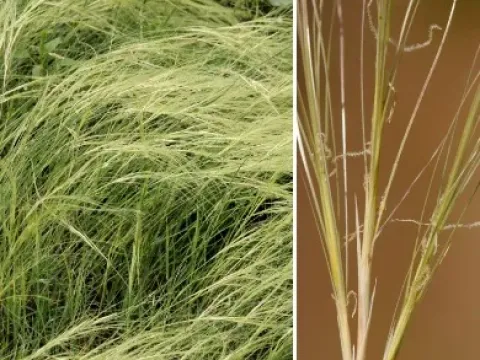
Scleropogon
Scleropogon
Scleropogon is a genus of perennial grasses belonging to the Poaceae family. It is native to arid and semi-arid regions of the Americas, known for its ability to thrive where other forage crops fail.
What the section contains

Scleropogon
The plant demonstrates significant drought resistance, making it an essential subject for agricultural research in water-limited environments. It performs best in well-drained, sandy or loamy soils where the risk of waterlogging is minimized.
Botanically, Scleropogon is distinguished by its fibrous root architecture that reaches deep into the soil. Its rigid, narrow leaves are specialized structures designed to minimize evapotranspiration, providing high survival rates under intense heat.
Its ability to spread through stolons makes it highly effective for soil stabilization and landscape restoration. Farmers utilize this grass to mitigate wind erosion and improve the structural integrity of sandy soils in rangelands.
Sunlight is the primary requirement for healthy growth, as the plant is obligately heliophilous. Soil conditions should preferably be neutral to slightly alkaline, ensuring that nutrients are bioavailable for sustained growth cycles.
While Scleropogon is robust, it is susceptible to various fungal pathogens when local humidity levels rise significantly above the ecological norm. Root decay is the most common consequence of over-irrigation.
Insect pests, specifically desert grasshoppers, can cause significant defoliation during peak summer months. Regular monitoring is necessary to prevent complete loss of biomass in pasture areas.
Competition from invasive weeds during the germination phase is a major threat. Mechanical removal or managed grazing can help suppress unwanted vegetation in the early growth stages.
Leaf rust can sporadically affect stands during unusually wet springs, impacting the overall vigour of the grass. Fungicide application is rarely feasible, making prevention through site selection the best strategy.
Proper pasture management, avoiding overgrazing, is essential to protect the root systems. Damage to the crown area by livestock can weaken the stand and make it vulnerable to secondary infections.