
Sea dropseed
Sporobolus maritimus
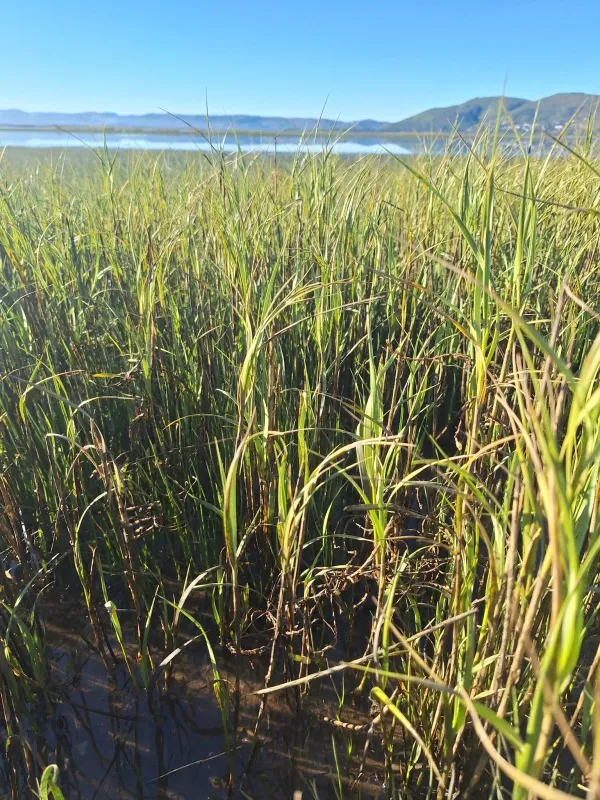
Description
Growing requirements
Sea dropseed (Sporobolus maritimus) belongs to the grass family (Poaceae). It is a perennial herbaceous plant that has adapted to survive in the extreme conditions of saline coastal areas and salt marshes.
The primary distribution range of this crop includes the Mediterranean and Atlantic coasts. The plant demonstrates a high tolerance to chloride and sulfate soil salinity, making it a promising candidate for the remediation of degraded lands.
For optimal growth, the crop requires high solar radiation and access to moisture, while remaining capable of enduring prolonged periods of temporary saltwater flooding. The root system of sea dropseed is deep and branched, ensuring strong soil stabilization.
The plant prefers sandy or loamy soils with a pronounced salt regime. The optimal pH level ranges from neutral to slightly alkaline, which is characteristic of coastal and steppe saline biotopes.
In agricultural practice, sea dropseed is utilized as a pasture grass for extensive livestock farming and as a tool for phytoremediation, preventing soil erosion on salt-affected lands.
Main diseases and pests
Typical threats to sea dropseed crops include specific fungal diseases of grasses that thrive in the high-humidity conditions of coastal zones.
Pests of the crop include various species of locusts and leaf-mining insects that feed on the vegetative mass of the plant during the summer season.
Competition with aggressive invasive weeds can significantly reduce the stand density during the first two years of the crop's life, until the root system has sufficiently matured.
Poor drainage and the stagnation of freshwater can lead to root rot, as the plant's metabolism is specifically calibrated for a saline tissue balance.
Anthropogenic heavy metal soil contamination reduces the biological productivity of sea dropseed, limiting its use as a fodder base in industrial regions.