
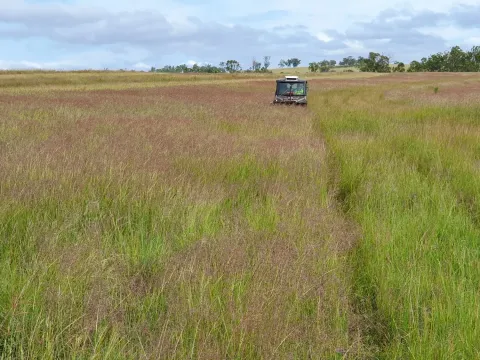
Queensland panic
Panicum queenslandicum
Queensland panic is a perennial grass species that thrives in warm climates, making it an ideal choice for specific agricultural regions. Successful establishment relies on sowing during periods with reliable soil moisture and rising temperatures, typically coinciding with the start of the rainy season.
What the section contains
Queensland panic
For optimal results, seeds should be sown into a well-prepared, firm seedbed. A sowing depth of 1-2 centimeters is recommended to ensure adequate soil coverage while allowing for successful emergence through the soil surface.
The seeding rate varies based on the intended use of the land, whether it is for intensive pasture grazing or hay production. Generally, a rate of 4-6 kilograms per hectare is sufficient to establish a robust and uniform stand.
Mechanical sowing techniques, including the use of precision drills and cultipackers, help ensure even distribution and good seed-to-soil contact. This practice is vital for accelerating germination and reducing the risks of seed desiccation.
Young seedlings require minimal competition during the first few weeks of growth. Therefore, it is important to choose a field with a low weed seed bank or to implement effective pre-sowing weed control measures to protect the young plants.
This grass species is highly valued for its exceptional drought tolerance, allowing it to survive and persist in semi-arid environments where other crops might fail. It demonstrates strong adaptation to diverse soil types, ranging from lighter loams to heavier clays.
Queensland panic requires full sun to maximize its photosynthetic potential and overall biomass production. Shaded environments inhibit growth and can lead to thin, weak stands that lack the density required for high-quality forage.
While the plant is hardy, it benefits significantly from adequate moisture during the peak growing season. It has the ability to remain dormant during prolonged dry spells and rapidly resume growth once rainfall occurs, showcasing its resilience.
Soil fertility management plays a role in productivity. Although it can grow in moderate-fertility soils, the application of nitrogen-based fertilizers in early spring significantly boosts leaf growth and nutritional value for livestock.
The plant thrives in warm conditions, with an optimal temperature range for growth typically between 20°C and 30°C. It enters a state of physiological rest when temperatures drop significantly, protecting its root structures until warmer conditions return.
Queensland panic provides a consistent source of forage, contributing significantly to the productivity of livestock operations. Its ability to regrow vigorously after grazing or cutting makes it a reliable perennial resource for farmers.
Nutritional analysis shows high protein content during the vegetative phase, which supports healthy growth rates in cattle and other grazing animals. Maintaining the forage in this vegetative stage through strategic management is key to maximizing yield benefits.
Dry matter yields depend on the specific management system and soil characteristics. In managed pastures with appropriate rainfall or supplemental irrigation, the grass can produce multiple cuts per season, ensuring a steady feed supply.
The plant exhibits excellent palatability, which is a crucial trait for pasture grasses. Animals readily consume it, leading to efficient feed conversion rates when grazed at the appropriate intensity throughout the season.
As a deep-rooted perennial, it helps improve soil structure over time by increasing organic matter content. This contributes to better soil water retention, benefiting both the crop itself and the overall health of the agricultural ecosystem.
Generally considered a robust plant, Queensland panic is rarely severely affected by common agricultural diseases. However, prolonged periods of high humidity can occasionally encourage the development of minor leaf spot pathogens.
Insect pests, particularly locusts and certain species of caterpillars, can pose a risk during outbreak years. Integrated pest management strategies, including regular field scouting and early detection, are the best defense against significant yield loss.
Root-feeding insects can cause localized patches of decline in the field. Maintaining a healthy, vigorous stand is the best natural defense, as strong root systems are better able to withstand minor insect damage.
Weed management is critical, especially during the seedling stage. Once the grass is fully established, its density usually suppresses most invading weeds, provided the stand is managed with proper stocking rates and appropriate rotation.
Biosecurity measures, such as sourcing certified seeds, are essential to prevent the introduction of new pests or diseases into the pasture. Good farm hygiene and responsible land management practices keep the crop healthy and productive.
Timing the harvest is essential for capturing the best forage quality. For hay, the grass should be cut at the early flowering stage before the stems become overly fibrous and lignified, ensuring the highest possible nutrient concentration.
Proper curing methods are necessary to preserve the forage. Windrow drying with periodic turning ensures even moisture loss, protecting the hay from spoilage and maintaining its nutritional integrity for storage.
A minimum stubble height of 6-10 centimeters must be maintained during cutting. This preserves the basal nodes and growing points, which is crucial for the plant's ability to regenerate and ensure long-term stand viability.
Seed harvesting requires attention to the maturity of the panicles. Once the seeds reach a dough stage and start to change color, harvesting should be performed promptly to avoid excessive seed shattering and potential yield loss.
Post-harvest cleaning and storage are vital for seed longevity. The seed must be dried to a safe moisture content and stored in a cool, dry, and rodent-proof environment to maintain high germination rates for future planting seasons.