
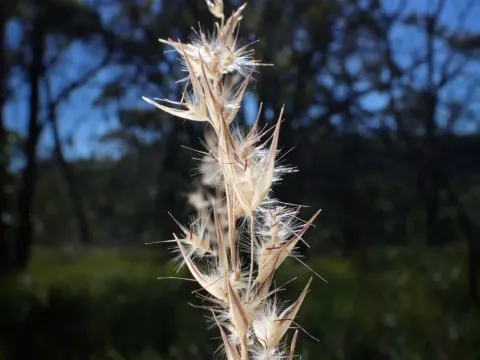
Pyrrhanthera
Pyrrhanthera
Pyrrhanthera (specifically Pyrrhanthera exigua) is a monotypic genus of grasses belonging to the Poaceae family. It is an annual plant native to arid regions, primarily adapted to harsh desert climates.
What the section contains

Pyrrhanthera
Sowing should be timed with the onset of the rainy season or following winter precipitation. The seeds germinate rapidly once moisture levels in the topsoil are sufficient to support early development.
When sowing, seeds should be placed at a shallow depth of 1-2 centimeters. Covering them too deeply can prevent germination, as the plant relies on quick access to solar energy.
Proper seedbed preparation involves minimizing soil disturbance to maintain natural moisture. A loose, sandy substrate provides the best environment for the roots to establish quickly.
Spacing during planting is crucial to ensure that each plant has access to limited soil nutrients and moisture, as competition within the field can lead to stunted growth.
Pyrrhanthera is highly specialized for desert environments. It requires full solar exposure and does not tolerate any degree of shading from surrounding vegetation.
The soil requirements are minimal; the plant prefers well-drained sandy or loamy soils. It thrives in low-fertility areas where other more demanding crops would fail.
Temperature tolerance is a key feature of this species. It can withstand intense heat during the day and cooler nights common in arid ecosystems, making it a robust annual grass.
Effective management requires maintaining a stable pH balance in the soil, ideally within the neutral to slightly alkaline range to maximize nutrient uptake.
Irrigation is generally not needed after establishment, but light watering during the germination phase can significantly increase the uniformity of the crop stand.
The primary threats to Pyrrhanthera include grazing by herbivores, which can quickly consume the limited biomass produced during the short growing season.
Insect pests, particularly locusts and other grasshoppers, represent a significant risk, as they can defoliate entire patches of the grass in a short period.
While the plant is resistant to many diseases, fungal pathogens such as rusts can occur if humidity levels are unexpectedly high for an extended period.
Root rot is a physiological threat usually triggered by poor drainage or over-irrigation, leading to the rapid decline of plant health in otherwise dry environments.
Wind erosion poses a structural threat to the plants, as the sandy soils they occupy are prone to shifting, which can expose or bury the delicate root systems.