
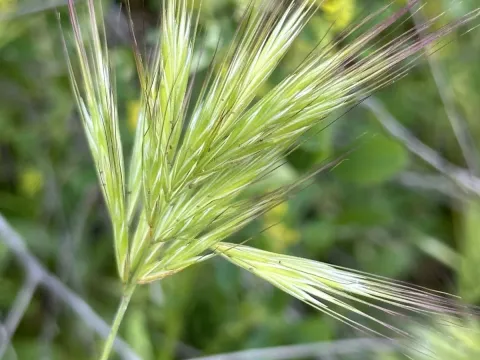
Red brome
Bromus rubens
Red brome (Bromus rubens) is a winter annual grass species within the Poaceae family. It is recognized for its ability to colonize disturbed areas and dry environments, making it a subject of study in both agronomy and land restoration.
What the section contains
Red brome
The sowing process typically occurs in the autumn. As a winter annual, the seeds require a period of cooler temperatures followed by moisture to break dormancy and ensure high germination rates.
Seeds are broadcast or drilled at a shallow depth of 1–2 cm. Excessive depth significantly reduces the emergence rate because the plant has limited seed reserves to fuel the initial growth phase.
When used in managed systems, spacing is determined by the intended use. For forage or ground cover, a standard drilling technique is applied to create a dense stand that prevents soil erosion.
Establishment is relatively rapid under favorable moisture conditions. Once the seedlings have reached the two-leaf stage, they demonstrate remarkable resilience against cold snaps.
Red brome thrives in arid and semi-arid climates. It is highly drought-tolerant and maintains productivity in conditions where moisture availability is the primary limiting factor.
Soil requirements are minimal regarding fertility. It grows effectively in sandy, rocky, or nutrient-poor soils, which makes it a useful species for revegetating degraded agricultural sites.
Adequate drainage is essential for healthy development. The plant is highly sensitive to waterlogging, as anaerobic conditions in the root zone quickly lead to crown rot and poor overall vigor.
Full sun exposure is required for optimal physiological function. In shaded or semi-shaded environments, the plant exhibits reduced tillering and lower reproductive success.
The optimal pH range is between 6.0 and 8.0. The species shows moderate tolerance to soil salinity, allowing it to perform better than many other forage grasses in salt-affected fields.
The forage yield of red brome is generally modest compared to high-intensity cultivated grasses. It produces high-quality biomass early in the season, which is valuable for grazing before it matures and develops stiff, sharp awns.
Biomass production is highly variable based on annual rainfall. In years with above-average winter precipitation, the vegetative growth can be dense, providing substantial fodder for livestock.
As the plant matures, the nutritional value decreases significantly. For maximum yield and quality, harvesting or grazing must be completed before the inflorescences fully harden.
Seed production is usually very high. This species is an efficient colonizer, and in non-cultivated fields, it can quickly become the dominant plant due to its massive seed output.
Total dry matter yield per hectare is usually between 1.5 to 3 tons, depending on soil quality and the management level applied to the stand.
Fungal pathogens such as leaf rust and powdery mildew are common in dense stands. These infections are more prevalent during spring seasons with high humidity and moderate temperatures.
Insect pests, including cereal aphids and various types of mites, can damage the plants. Large infestations require monitoring and potential intervention to protect the photosynthetic area.
Competition from broadleaf weeds can suppress red brome during the early growth stages. Integrated weed management strategies are necessary to ensure the stand remains pure.
Overgrazing poses a significant risk to long-term sustainability. If grazed too heavily during the reproductive stage, the stand may fail to produce enough seed for the subsequent season.
Finally, the accumulation of seed banks in the soil is a potential challenge for future crop rotation. Once established, the species is difficult to eradicate without intensive mechanical or chemical control.