
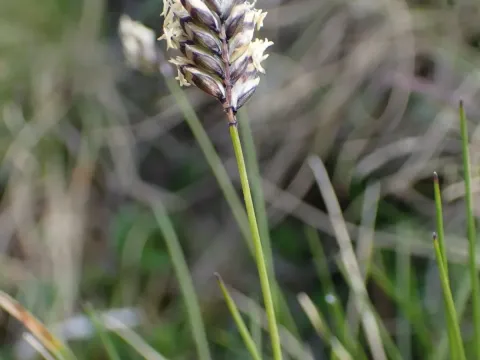
Oreochloa disticha
Oreochloa disticha
Oreochloa disticha is a perennial grass species belonging to the Poaceae family. It is a highly specialized plant native to the alpine and subalpine zones of European mountain ranges, where it thrives in challenging, nutrient-poor conditions.
What the section contains
Oreochloa disticha
Botanically, the plant is characterized by its compact, dense tufts or tussocks. This growth habit is an essential adaptation to high-altitude environments, protecting the inner tissues from desiccating winds and low temperatures while stabilizing the rocky soil.
The grass prefers well-drained, stony substrates and is highly sensitive to waterlogging. It thrives in sites with significant sun exposure and is a common colonizer of calcareous scree slopes, where competition from larger, more vigorous plants is minimal.
Regarding climate, Oreochloa disticha requires a distinct seasonal cycle with cool, humid growing conditions in summer and a reliable snow cover in winter. This snow insulation is critical to prevent root damage during prolonged frost periods.
The plant demonstrates extreme resilience to environmental stressors, including high UV radiation and extreme temperature fluctuations. Its slow growth rate allows it to allocate energy towards robust root development rather than biomass production.
The agricultural use of Oreochloa disticha is primarily limited to extensive grazing in alpine pastures. It is valued for its ability to maintain soil integrity and provide a persistent cover that supports the survival of other high-mountain plant species.
Livestock, particularly sheep and goats, graze on the young foliage of this grass during the short alpine summer. Although not a high-yielding forage crop by agricultural standards, it is an essential component of the mountainous dietary landscape.
There is no commercial harvesting or hay production for this species due to the rugged terrain of its native habitat. Attempts to cultivate it for industrial forage production are generally discouraged as it cannot compete with lowland grass species.
The plant serves a vital function in preventing soil erosion on steep slopes. Due to its dense root system, it plays a key role in ecological restoration projects aimed at repairing damaged high-altitude mountain landscapes.
Future management of this species remains focused on conservation rather than domestication. Preserving natural grazing patterns helps maintain the health and biodiversity of the alpine ecosystems where it naturally resides.