
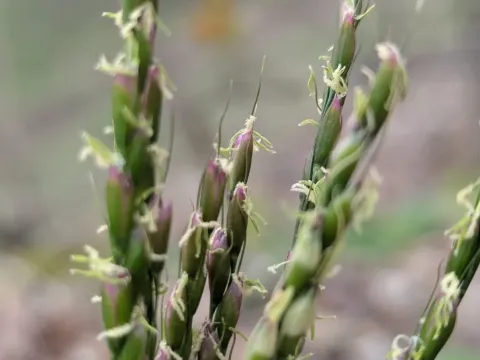
Oryzopsis
Oryzopsis
Oryzopsis is a perennial grass species typically established through early spring seeding. This timing allows the seeds to utilize soil moisture accumulated during the winter, which is critical for the slow-developing seedlings to successfully anchor themselves. Seeds should be planted at a shallow depth of 2–3 centimeters.
What the section contains


Oryzopsis
Seedbed preparation is vital for ensuring uniform stands. The soil must be fine-textured, firm, and level to allow for consistent seed-to-soil contact. Using specialized drills helps maintain precise seeding rates, preventing overcrowding or gaps that can invite opportunistic weed growth during the early stages.
In regions with milder climates, late-autumn seeding is an alternative option, allowing for natural stratification of the seeds. This can result in earlier spring growth, providing the plants with a competitive advantage against weeds. Precise timing is required to prevent germination before the arrival of hard frosts.
For seed production, wide-row spacing is recommended to facilitate inter-row cultivation and access for pest management. For pasture or hay usage, standard grain-drill rows are generally employed to maximize density and provide a uniform canopy that suppresses competitive plant species effectively.
Post-seeding compaction is an essential step to enhance capillary moisture movement. Farmers should monitor the surface to prevent the formation of a hard crust, which could hinder emergence. In some cases, a light harrowing may be required if soil crusting occurs shortly after heavy rain.
Oryzopsis is highly regarded for its drought tolerance and winter hardiness, making it suitable for semi-arid and steppe environments. It exhibits remarkable resilience to temperature fluctuations, which allows it to thrive in regions where more sensitive forage grasses often fail to survive.
Regarding soil conditions, this culture requires excellent drainage. It does not tolerate waterlogging and performs best on sandy loams, loams, or well-structured calcareous soils. Heavy, compacted clays that prevent proper root aeration should be avoided to prevent plant stress and mortality.
The plant is light-demanding and requires full exposure to sunlight for optimal growth. Shaded environments, such as those near tree lines or dense brush, significantly reduce vegetative production and overall vigor. Proper site selection in open, airy fields is crucial for maximum yield.
Nutrient requirements are moderate, but the plant responds positively to balanced nitrogen and phosphorus fertilization. Calcium content in the soil is also a key factor for the plant's health and structural integrity. Periodic soil testing is recommended to adjust nutrient levels based on field productivity.
Weed control is of paramount importance during the establishment phase. Because Oryzopsis grows slowly during its first year, it is highly susceptible to competition. Integrated weed management, including mechanical cultivation or appropriate herbicide application, is essential to ensure the crop survives to maturity.
The forage yield of Oryzopsis is stable over many years, contributing to its longevity in both pastures and meadow systems. Its ability to regrow after grazing makes it a favored species for sustainable pasture management, as it provides a reliable source of nutrition throughout the growing season.
Hay production is most efficient when harvesting occurs at the early heading stage. This timing captures the optimal balance between high protein levels and structural fiber, ensuring quality feed for livestock. Delayed harvesting leads to stem lignification, significantly reducing the feed value.
Oryzopsis plays an important role in soil conservation. Its complex and deep root system effectively binds the soil, making it an excellent choice for erosion control on slopes and degraded lands. This dual-purpose utility adds value to its role as a productive forage species.
Seed production potential can be significant under favorable conditions. However, the risk of seed shattering as it matures requires careful monitoring and timely harvesting. Technical equipment is necessary to capture the seed effectively while minimizing losses during the ripening phase.
The productivity of an established stand can be maintained for up to 8 years with proper management practices. Regular grazing rotation, light harrowing to break up plant mats, and appropriate fertilization schedules help sustain yields and keep the stand vigorous over the long term.
Powdery mildew is the most common disease affecting Oryzopsis, particularly in dense stands with poor airflow or high humidity. Managing plant density and ensuring good field ventilation are the primary preventive measures to keep the plants healthy and free from fungal infections.
Root rot diseases present a significant risk if the soil remains waterlogged for extended periods. Once root integrity is compromised, the plants become susceptible to various soil-borne pathogens. Site selection and ensuring adequate soil drainage are the most effective strategies for prevention.
Several insect pests, including aphids and various bugs, may cause damage to leaves and inflorescences. Farmers should monitor fields regularly during the active growing season. If pest populations exceed economic thresholds, the use of targeted insecticides may be necessary to protect the harvest.
Small mammals and rodents can cause considerable damage during the winter months by grazing on the crown of the plants beneath the snow. Protecting the field borders and implementing integrated rodent control programs can mitigate these losses and protect the stand for spring regrowth.
Competition from invasive weeds remains a constant threat, especially if the stand becomes thinned. Maintaining healthy plant vigor and following a strict management routine prevents opportunistic weeds from establishing, which is key to long-term survival in pastoral landscapes.
Hay harvesting is typically performed using mowers, with the best results obtained in the early heading stage. The cut forage is left in windrows for drying before baling. This process requires stable weather conditions to prevent nutrient leaching and spoilage of the crop.
Seed harvesting requires a two-stage approach: swathing followed by picking up with a combine once the moisture content has dropped to a level safe for storage. This method helps reduce the impact of shattering, ensuring that the maximum amount of high-quality seed is collected.
Post-harvest seed handling includes immediate cleaning and drying to reach a moisture content of 12–14%. This is essential to prevent heating and fungal growth during storage. Proper drying ensures that the seed maintains high germination rates for future planting seasons.
Cutting height is critical to the plant's health; a minimum height of 5–7 centimeters should be maintained. This ensures that the crown and basal nodes remain intact, which allows for rapid regrowth and recovery after the mechanical stress of harvesting or intensive grazing.
The frequency of harvesting depends on the intended use. In pastures, managed rotational grazing prevents the over-consumption of plants, promoting uniform development and encouraging tillering. In hayfields, cutting schedules should be aligned with the plant's physiological development to ensure sustainability.