
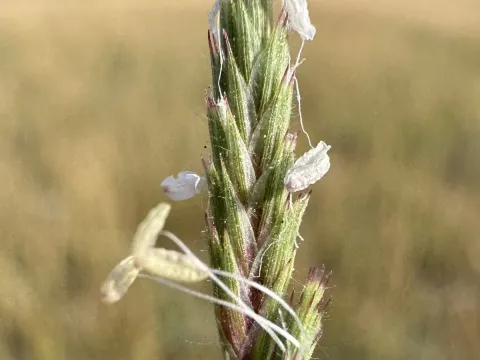
Orcuttia
Orcuttia
Orcuttia is a genus of rare annual grasses within the family Poaceae. These plants are uniquely adapted to inhabit vernal pools, which are seasonal wetlands that undergo extreme cycles of inundation followed by desiccation.
What the section contains

Orcuttia
The native distribution of Orcuttia is largely confined to the valleys of California, USA. Their life cycle is strictly synchronized with the filling and drying of these ephemeral ponds, requiring specific hydrological conditions for germination and maturation.
Botanically, Orcuttia species are characterized by their glandular foliage and specialized root systems that maintain stability in drying clay substrates. They exhibit significant morphological adaptations to thrive in aquatic environments that eventually become arid landscapes.
The soil requirements are highly specific; they thrive in heavy, poorly drained clay soils. These soils are critical as they hold water long enough to sustain the initial growth stages before the seasonal drought occurs.
It is important to note that Orcuttia is not classified as an agricultural crop. It serves no role in conventional crop production, and its significance is rooted purely in botanical science and the conservation of fragile wetland ecosystems.
The primary threat to Orcuttia is the loss of its habitat. Agricultural development, such as land leveling and draining for large-scale farming, has decimated the vernal pool ecosystems that this genus depends on for survival.
Climate change and altered precipitation patterns present further risks by shortening the hydroperiod of their habitats. Additionally, the introduction of non-native, invasive plant species poses a constant threat by competing for space and nutrients in their small, fragmented ranges.