
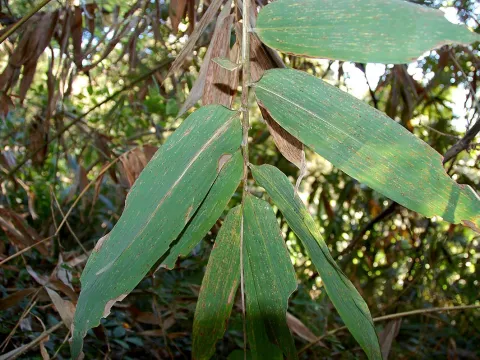
Oreobambos
Oreobambos
Oreobambos is a genus of large perennial plants belonging to the grass family (Poaceae). It is best represented by the species Oreobambos buchwaldii, which is native to the montane forests of tropical East Africa.
What the section contains

Oreobambos
The natural habitat of this bamboo spans across the highlands of Tanzania, Kenya, and the Democratic Republic of Congo. It typically thrives in high-altitude environments where the air is cool and moisture levels are consistently high throughout the year.
To cultivate Oreobambos successfully, one must replicate its natural montane environment. The plant requires deep, fertile, and well-drained soils that are rich in organic matter. Avoid heavy clay soils that retain excessive water, as this can lead to root issues.
Climate-wise, the species is sensitive to temperature extremes. It performs best in regions with moderate temperatures and frequent mist or rain. It does not tolerate prolonged frost or extreme drought conditions, making greenhouse or shade-house cultivation necessary in non-native climates.
Economically, Oreobambos is prized for its sturdy, hollow culms. Local communities utilize these culms for construction purposes, weaving traditional baskets, crafting furniture, and making various agricultural tools, highlighting its role as a versatile non-timber forest product.
Fungal pathogens represent the primary threat to Oreobambos, especially in poorly ventilated environments with high humidity. These infections can manifest as stem rot or leaf spot, weakening the overall integrity of the culms.
Pests such as bamboo aphids and various scale insects frequently attack the succulent young shoots. Monitoring these populations is vital during the growing season to prevent damage to the future harvest.
Overcrowding is a significant agronomic risk. Without proper spacing and regular thinning of old or damaged canes, the plant structure becomes susceptible to increased pest pressure and diseases.
Soil nutrient depletion can also impact yield over time. While the bamboo is resilient, managed plantations benefit significantly from organic fertilization practices to maintain healthy growth rates.
Biosecurity measures should be implemented to prevent the spread of viral pathogens often vectored by local insect populations, ensuring the long-term viability of the bamboo grove.