
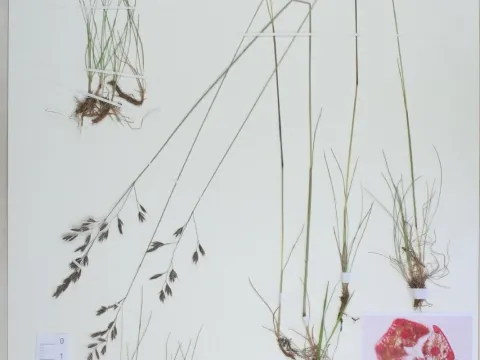
Violet fescue
Festuca violacea
Violet fescue (Festuca violacea) is a perennial grass species within the Poaceae family. It is primarily recognized as a specialized alpine and subalpine plant adapted to the challenging environments of mountain landscapes.
What the section contains
Violet fescue
This species naturally occurs in high-altitude regions, where it has evolved to thrive in rocky, nutrient-poor, and well-drained soils. Its biological structure allows it to withstand high solar radiation and extreme thermal fluctuations throughout the year.
Agricultural requirements for Festuca violacea focus on avoiding waterlogged conditions. It performs best in soils with excellent drainage, making it an ideal candidate for slope stabilization and mountain pasture restoration.
The climate adaptation of this grass is exceptional. It is capable of entering dormancy to survive harsh winters and resumes growth rapidly during short, cool alpine summers. Its slow initial growth rate makes it less competitive during the establishment phase.
In terms of land use, Violet fescue is highly valued for grazing. It forms dense tufts that support soil integrity and provide a nutritious, albeit slow-growing, forage source for ruminants in mountainous areas where other agricultural crops fail to thrive.
The primary threats to Festuca violacea include various fungal pathogens that thrive in high-humidity microclimates. Rust fungi (Puccinia spp.) can cause significant damage to foliage if the plant density is too high or if air circulation is poor.
Insect pests such as wireworms are known to target the underground parts of the plant, potentially causing stunted growth or mortality in younger stands. Integrated pest management is recommended to keep populations below economic thresholds.
Competition from invasive weeds and faster-growing pioneer grass species poses a major risk during the first year of establishment. Regular weeding or appropriate grazing management is essential to ensure the longevity of the stand.
Overgrazing is a critical threat to this species. Because of its slow regrowth cycle, persistent grazing without adequate rest periods can lead to the depletion of root reserves, causing the grass to disappear from the pasture ecosystem.
Environmental stress, such as prolonged drought combined with excessive solar exposure, can weaken the plant and increase its susceptibility to secondary infections. Proper site selection remains the most effective strategy for mitigation.