
Ventenata
Ventenata
Ventenata (Ventenata dubia) is an annual grass species belonging to the Poaceae family. It is recognized as a significant invasive weed that poses a major threat to agricultural productivity and native rangelands.
What the section contains

Ventenata
Originally native to Europe and Western Asia, the plant has successfully invaded North America, where it thrives in various environments, often displacing native forage species and reducing crop yields.
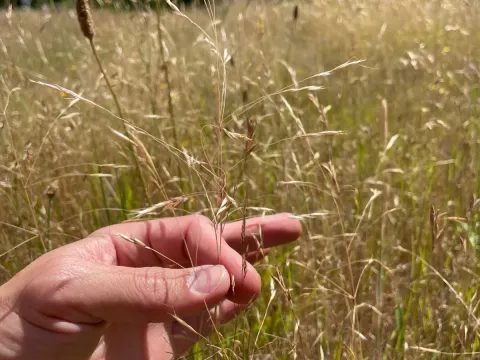
The botanical structure of the plant consists of thin, erect culms and open, wispy panicles. It reaches maturity relatively quickly, allowing it to complete its reproductive cycle before many other competitive grasses.
Regarding site requirements, Ventenata is highly adaptable to a range of soil textures. It particularly excels in disturbed sites, thin soils, and pastures where competition from perennial grasses has been reduced.
Its climatic tolerance is broad, as it is winter-hardy and capable of germinating early in the spring. This gives it a phenological advantage in accessing soil moisture and nutrients over slower-growing species.
As a weed, Ventenata poses no economic benefit in agricultural settings. Instead, it diminishes the nutritional value of hay and forage, leading to lower weight gains in livestock and reduced land quality.
The species is resilient to many common plant diseases, yet it serves as a host for pathogens that can negatively impact cultivated cereal crops, acting as a reservoir for viruses and fungi.
Insects and pests that affect small grains often colonize Ventenata populations. This facilitates pest migration into nearby commercial wheat or barley fields, complicating integrated pest management.
Control strategies must be implemented prior to seed maturation. If plants are allowed to flower and set seed, the infestation will persist for years due to the persistent nature of the seed bank.
Management involves a combination of mechanical control, such as timed mowing, and chemical interventions using selective herbicides. Integrated strategies are essential for long-term population reduction.