
Ventricose goatgrass
Aegilops ventricosa
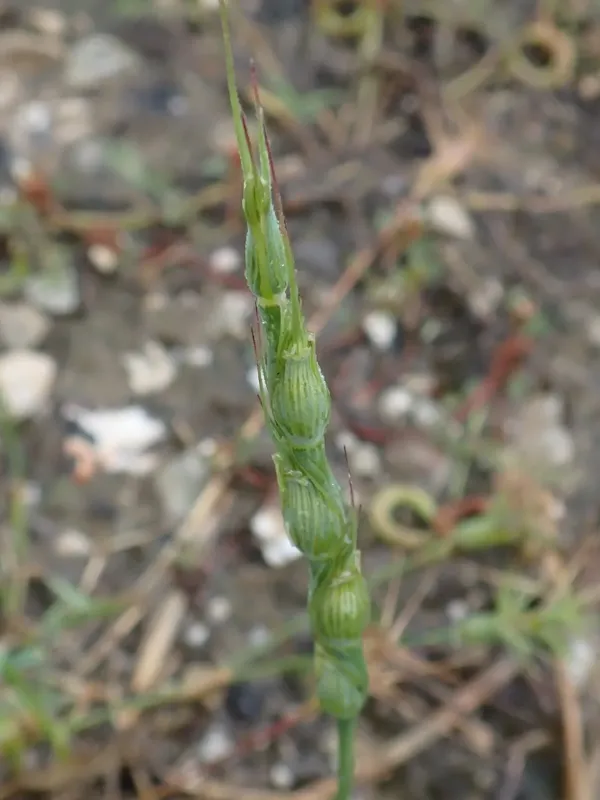
Description
Growing requirements
Aegilops ventricosa, commonly known as Ventricose goatgrass, is an annual grass species belonging to the Poaceae family. It is recognized as an essential wild relative of wheat, playing a pivotal role in genetic research due to its robust and diverse genetic architecture.
The plant is native to the Mediterranean basin, stretching across Southern Europe and North Africa. It thrives in various environments, showing a preference for well-drained, lime-rich, or stony soils that are typical of its natural Mediterranean habitat.
Climate adaptability is one of the most prominent features of this species. It has evolved to survive in arid and semi-arid conditions, demonstrating exceptional tolerance to heat stress and moisture scarcity during the critical stages of its developmental cycle.
Botanically, it is a tetraploid species with a UUMN genome composition. This unique genetic makeup allows it to serve as a valuable donor of agronomically important traits when cross-bred with Triticum aestivum (common wheat) to improve stress tolerance and yield potential.
Its primary agricultural utility lies in breeding programs rather than as a forage or grain crop itself. By providing resistance genes, it helps plant breeders develop new varieties of wheat capable of withstanding environmental challenges and diseases.
Main diseases and pests
Ventricose goatgrass possesses a strong evolutionary defense system against various pathogens. However, like other wild grasses, it can be susceptible to environmental stresses and fungal infections that arise under specific conditions of high humidity or poor aeration.
Major threats to the crop development include rust fungi and powdery mildew, which can significantly impact the vegetative mass. Monitoring for these diseases is crucial in experimental stations to preserve the genetic integrity of the wild plant samples.
In certain agricultural contexts, this species is treated as a troublesome weed. Its invasive potential, combined with its resistance to some common herbicides, makes it a challenge for farmers managing wheat fields where cross-contamination might occur.
Integrated pest management strategies are often implemented to control its spread. These strategies involve mechanical removal, crop rotation, and the application of targeted selective herbicides to ensure it does not interfere with the growth of main crops.
Future studies focus on leveraging the natural resistance mechanisms found in this species. By identifying specific gene sequences, scientists aim to introduce permanent immunity against common agricultural threats into commercial wheat varieties, ensuring long-term yield stability.