
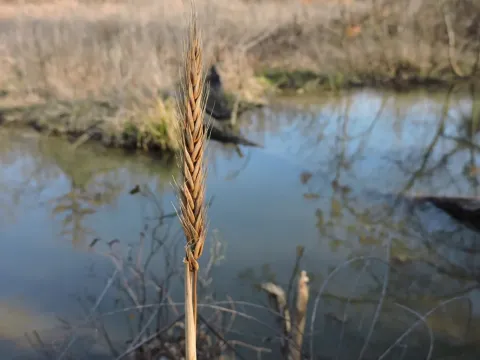
Virginia wildrye
Elymus virginicus
Virginia wildrye (Elymus virginicus) is a cool-season perennial bunchgrass native to North America. It belongs to the Poaceae family and is commonly found in moist forests, floodplains, and along stream banks.
What the section contains
Virginia wildrye
The planting of Virginia wildrye is best performed in the fall. Seeds require a period of cold stratification to break dormancy and ensure uniform germination during the following spring season.
Seeds should be sown at a depth of approximately 1 to 2 centimeters into well-prepared soil. Proper soil compaction after sowing ensures optimal contact between the seed and the soil environment.
This grass establishes itself relatively quickly, making it a valuable choice for initial site stabilization. Its deep, fibrous root system is effective in holding soil structure together on vulnerable slopes.
When used in seed mixtures, it is important to monitor its establishment, as it can be quite competitive against other native species. Proper seeding rates are essential to achieve an ideal stand density.
Virginia wildrye thrives in moist, well-drained soils rich in organic matter. While it prefers consistent moisture, it is also known to tolerate periods of flooding, making it suitable for riparian sites.
The species shows good adaptability to light conditions, growing well in full sun or partial shade. This versatility allows it to be integrated into agroforestry systems and woodland edges.
It is a highly winter-hardy grass, capable of surviving harsh freezing temperatures. This resilience allows for rapid growth in early spring, providing forage long before many other species begin to emerge.
Soil pH should ideally be near neutral, although the plant displays some tolerance for slightly acidic or alkaline conditions. Poorly drained, extremely heavy clay soils may require amendment for best performance.
Aeration is beneficial for root development. In compacted areas, mechanical loosening of the soil surface before planting can significantly improve stand success and long-term plant health.
The primary use of Virginia wildrye is for forage, specifically as high-quality grazing for livestock. It is particularly nutritious during its vegetative phase before the seed heads fully mature.
Hay production can be significant if harvested at the appropriate developmental stage. Proper fertilization, particularly with nitrogen, can enhance biomass yield and improve the crude protein content of the hay.
Beyond forage, this species is extensively used for ecological restoration and soil erosion control. Its ability to create dense cover quickly makes it an effective tool for protecting banks and slopes.
Wildlife habitat enhancement is another key benefit. It provides excellent cover and nesting sites for various bird species, as well as forage for native herbivores throughout the year.
Sustainable grazing management is crucial to maintain yield levels. Overgrazing can deplete root reserves and reduce the longevity of the stand, so rotating livestock is a recommended practice.
Like many native grasses, Virginia wildrye is susceptible to rust fungi and powdery mildew, especially during humid weather. Maintaining proper airflow between plants is a vital preventative measure.
Insects such as grass aphids and certain beetles can occasionally cause damage to the leaves or stems. Monitoring stands during peak growing months helps to identify and address infestations early.
Root rot can occur in areas with poor drainage and excessive standing water during cool seasons. Ensuring site drainage is fundamental to avoiding these pathogenic threats to the root system.
Invasive weed species can pose a serious threat during the establishment phase. Using pre-emergent controls or physical weeding during the first year is necessary to ensure the grass becomes fully established.
Rodent damage during winter can lead to thinning of the stand. Keeping nearby areas mowed or managed can help decrease the populations of animals that may feed on the crowns of the grass.
For hay, the optimal harvest time is during the late boot stage or early flowering. Harvesting at this stage ensures the best nutritional quality before the plant directs energy into seed production.
Efficient drying is necessary to produce high-quality hay. Tedding or raking the windrows allows for even moisture loss, which prevents mold and preserves the nutrient value for winter livestock feeding.
Seed harvest is typically conducted once the seeds have reached physiological maturity. Harvesting should occur when the seeds are firm and before significant natural shattering occurs in the field.
When used in a pasture system, rotational grazing should be practiced to allow for adequate regrowth. The height of the grass should not be clipped too short to ensure the plant continues to thrive.
After the final harvest of the season, a light fertilization or management pass may be beneficial to encourage root strength, helping the plant prepare for dormancy and successful spring emergence.