
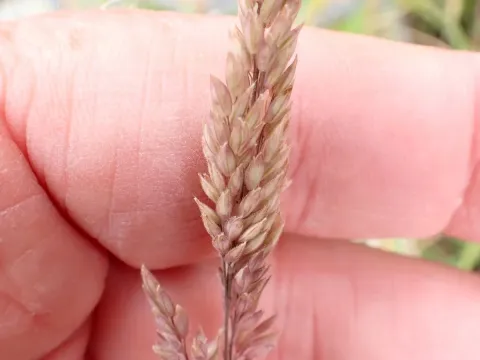
Velvet grass
Holcus L.
Velvet grass (Holcus L.) is a perennial herbaceous plant belonging to the grass family (Poaceae). The most common species found in agricultural contexts are common velvet grass (Holcus lanatus) and creeping soft grass (Holcus mollis).
What the section contains


Velvet grass
Sowing is typically planned for the spring when soil temperatures reach 8–10 degrees Celsius. Early spring is considered the optimal time, allowing seeds to utilize stored soil moisture for successful germination and early development.
For pasture or hay production, seeds are sown using broadcasting or row seeding methods. The seeding rate varies based on seed quality and soil fertility, generally ranging from 10 to 12 kilograms per hectare.
Late autumn sowing is also feasible in temperate regions, which can facilitate earlier spring regrowth. Seeds should be planted at a shallow depth of 1–2 cm to ensure proper contact with the moist soil layer without burying them too deeply.
The culture demonstrates strong natural regeneration capabilities, making frequent re-seeding unnecessary under proper management. The plant spreads through both seeds and rhizomes, which helps create a dense and resilient turf cover.
Holcus shows moderate climatic requirements, thriving in cool and moist environments. It is well-adapted to temperate zones where consistent precipitation occurs throughout the growing season.
While the plant is adaptable to various soil types, it prefers loose, loamy, or sandy-loam substrates. It exhibits good tolerance to slightly acidic soil conditions, making it suitable for reclaiming low-productivity lands.
Moisture availability is the most critical factor for successful cultivation. Velvet grass performs poorly in drought conditions, so planting in excessively dry, sandy areas without a stable water table is not recommended.
The plant possesses excellent winter hardiness, enabling it to survive harsh winters under snow cover. In temperate climates, it maintains viability over several years without significant thinning of the stand.
Agronomic management includes annual spring harrowing to remove dead plant debris and stimulate tillering. The application of mineral fertilizers, particularly nitrogen, significantly increases biomass production and nutritional quality.
The yield of velvet grass green mass depends heavily on moisture levels and soil fertility. Under optimal conditions, the culture can provide two cuts per season, forming a dense and nutritious sward.
When used in pasture mixtures, the plant shows high resistance to trampling by livestock. This makes it a valuable component for improving pastures that are subjected to moderate grazing pressure throughout the season.
Average hay yields typically range from 3 to 5 tonnes per hectare, depending on local conditions and management intensity. With favorable weather and proper fertilization, yields can exceed these figures.
Forage quality is considered moderate, though palatability is high when the plant is young. Harvesting before the flowering stage is essential to maintain high protein content and digestibility for livestock.
Utilizing this culture allows for the efficient use of low-lying, damp fields that are often unsuitable for more demanding cereal or legume crops.
Common diseases affecting Holcus include rust and powdery mildew, which often attack foliage under high humidity and dense canopy conditions. Fungicides should be applied if symptoms spread rapidly.
Pests such as cereal flies and stem-boring beetles may damage young seedlings, reducing overall stand density. Monitoring fields during the germination stage allows for timely intervention if necessary.
Aphids may occasionally colonize the generative parts of the plant, extracting sap and reducing seed quality. Insecticides are rarely needed but may be used in years with significant pest outbreaks.
Root rot caused by Fusarium can develop in waterlogged soils, leading to premature plant death. Improving field drainage is the most effective preventative measure against this pathogen.
Overall, the plant has a strong natural immune system. The primary protection strategies involve maintaining proper crop rotation and preventing water stagnation in the field to minimize fungal risk.
Harvesting for hay should be performed at the heading stage when the plant reaches its peak nutritional value. Delaying harvest leads to stem lignification and a decline in overall forage quality.
Standard mowing equipment is used, followed by wilting in windrows. Depending on weather conditions, drying typically takes two to four days with regular tedding to ensure uniform moisture reduction.
For pasture management, a rotational grazing system is highly recommended. This practice allows plants to recover between cycles, preventing root exhaustion and maintaining the long-term health of the pasture.
When harvesting for seed, cutting should occur when panicles turn a brownish hue and the grains become firm. Preventing seed shattering is crucial, as the panicles often ripen unevenly.
The harvested product must be stored in dry, well-ventilated areas to prevent mold growth. Proper storage ensures the preservation of vitamins and maintains high palatability for winter feeding.