
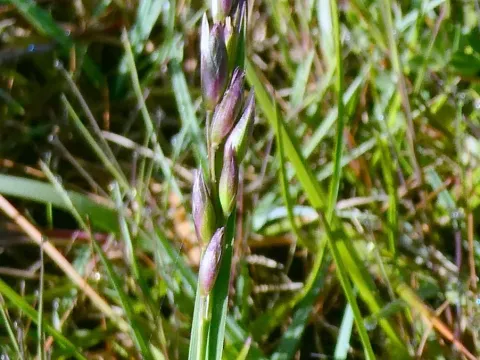
Heath grass
Danthonia decumbens
Heath grass (Danthonia decumbens) is a perennial grass species belonging to the Poaceae family. It is recognized as a hardy plant suitable for extensive grazing lands and semi-natural grassland systems.
What the section contains
Heath grass
The plant originates from Europe and parts of Western Asia. It typically thrives in acidic, nutrient-poor soils, such as heathlands, moorlands, and damp meadows where other competitive species struggle to survive.
In terms of climatic requirements, it is highly resilient, showing significant tolerance to cold temperatures and frost. It prefers moisture-retentive soils but requires proper drainage to avoid waterlogging during dormant periods.
Botanically, it forms dense tufts, making it highly resistant to grazing pressure. A distinctive feature is the presence of cleistogamous flowers hidden within the leaf sheaths, which ensures reproductive success even in harsh environments.
For agricultural management, it is important to avoid over-liming or heavy fertilization. Heath grass is an low-input crop that thrives best under stable conditions without the need for intensive soil chemical amendments.
Heath grass is generally robust and rarely suffers from severe pathological outbreaks, which contributes to its value in low-maintenance pastoral farming systems.
Potential threats include fungal rusts that may appear during prolonged wet weather conditions. Maintaining good air circulation in the sward is the best preventative measure.
Insect pests are typically not a major issue, although localized infestations of aphids can occur during the reproductive phase. Such attacks rarely reach economic injury levels.
Soil-borne pests like wireworms may occasionally damage established stands if the sward is re-seeded or if the field was previously used for intensive tillage.
Integrated management should focus on preserving natural biodiversity in the grassland, as healthy soil ecosystems keep these potential threats under control naturally.