
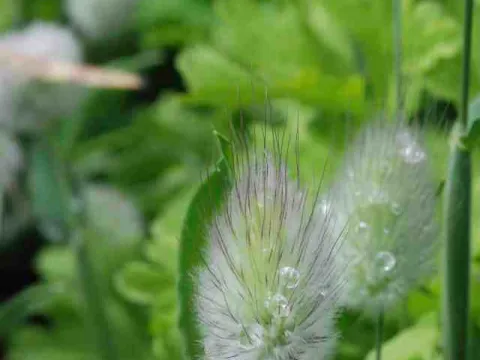
Hare's Tail
Lagurus
Lagurus ovatus, commonly known as Hare's Tail, is a delicate annual grass in the Poaceae family. Sowing is typically performed in early spring as soon as the soil can be worked, ensuring temperatures are stable.
What the section contains

Hare's Tail
For commercial production, starting indoors in trays during March is recommended. Seeds are surface-sown and covered with a very thin layer of vermiculite or soil, as they require light to germinate effectively.
Germination occurs within 10 to 14 days when the temperature is maintained between 18 and 20 degrees Celsius. Seedlings should be grown with plenty of light to ensure sturdy stems.
Transplanting to the field occurs once the danger of frost has passed. Spacing is crucial; plants are usually set 20-25 cm apart to allow proper airflow and prevent fungal issues.
Consistent moisture is needed during the early growth stages to establish a strong root system, but once the plants mature, they become quite hardy and drought-tolerant.
Hare's Tail originates from Mediterranean coastal regions, dictating its preference for full sun. It performs best in locations that receive at least 6 to 8 hours of direct sunlight daily.
The soil must be well-draining, sandy, or loamy. This species is highly susceptible to root rot if grown in heavy, waterlogged soils, making site selection a critical agronomic decision.
While tolerant of low-nutrient soils, an application of balanced, slow-release fertilizer can encourage better panicle production. Avoid high-nitrogen fertilizers, which promote foliage at the expense of seed heads.
The grass is well-adapted to maritime climates. It thrives in moderate humidity but requires good air circulation to maintain its signature soft texture and silvery-green appearance.
Weed control is essential during the first weeks of growth. Once the grass canopy closes, it is usually strong enough to suppress most competing weeds in the field.
Fungal pathogens are the primary concern for Lagurus ovatus, particularly in humid or overcrowded conditions. Damping-off and root rot are common in poorly drained fields.
Powdery mildew may develop if there is insufficient airflow between plants. Management involves adjusting plant density and ensuring that fields are kept clean of excessive moisture.
Aphids can infest the stems during the vegetative phase. Scout the fields regularly and utilize integrated pest management strategies to keep populations below the economic threshold.
In hot and dry spells, spider mites may appear. Monitoring the underside of leaves for early signs of infestation is recommended to prevent widespread damage to the crop.
Crop rotation is strongly advised to manage soil-borne pathogens. Avoid planting Hare's Tail in fields where other grasses or cereals have been grown recently.
Harvesting is the most critical stage for the quality of the dried product. The ideal timing is when the panicles are fully formed and firm, but before they start shedding pollen.
Stems should be cut early in the day once the dew has evaporated. This timing helps maintain the integrity of the spikes and prevents the stems from drooping during the drying process.
Bunches are gathered and hung upside down in a shaded, well-ventilated area. This traditional method ensures that the Hare's Tail retains its characteristic shape and soft, silky texture.
Drying typically takes about two weeks depending on the environmental conditions. Once dried, the grass is highly durable and can be preserved for several months or even years.
Proper storage is essential to prevent re-absorption of humidity. Keep the finished crop in a cool, dry place protected from sunlight to maintain its color and aesthetic value for decorative use.