
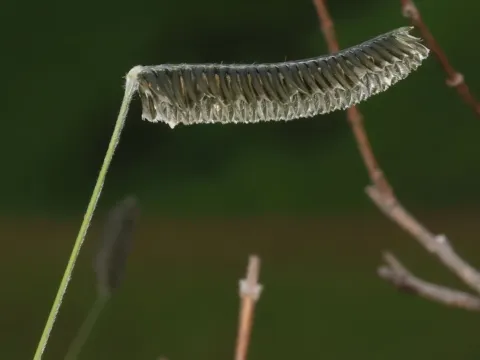
Harpochloa
Harpochloa
The sowing of Harpochloa is typically scheduled to coincide with the onset of the rainy season to ensure sufficient soil moisture for seed germination. The ideal soil temperature for successful establishment is between 20 and 25 degrees Celsius.
What the section contains

Harpochloa
Seeds should be sown at a shallow depth of 1 to 2 centimeters to prevent the exhaustion of nutrient reserves in the embryo before emergence. A firm contact between the seed and the soil surface is essential for consistent water uptake.
Field establishment involves either drilling or broadcasting techniques, depending on the scale of production. The seeding rate must be calibrated based on the purity and germination capacity of the seeds to achieve the desired stand density.
Young seedlings require intensive weed management during the first few months of growth. Because Harpochloa exhibits relatively slow initial development, minimizing competition from faster-growing weeds is vital for the survival of the crop.
Once the root system is established, the grass begins to tiller vigorously, forming a dense and resilient turf. By the second growing season, the stand typically reaches full maturity and requires minimal intervention to remain productive.
Harpochloa belongs to the Poaceae family and is a perennial grass native to parts of Southern Africa. It has evolved in environments characterized by periodic drought, making it a robust candidate for regions with unpredictable rainfall patterns.
The crop thrives in well-drained soils, including sandy loams, and is notably tolerant of low-fertility conditions. This resilience allows it to be used successfully in the reclamation of marginal or degraded agricultural lands.
Optimal growth for this species occurs under full sun exposure, as it does not perform well in shaded conditions. While it is highly drought-tolerant, it responds positively to irrigation, resulting in significantly higher yields of green forage.
Agronomic management requires balanced fertilization, specifically focusing on nitrogen applications at the start of the growing season to boost biomass production. Proper soil management ensures the availability of essential trace elements.
Harpochloa is well-regarded for its soil-binding properties, which help mitigate erosion on slopes. Its ability to withstand trampling by livestock makes it an excellent choice for integrated pasture systems in tropical and subtropical regions.
Harpochloa is generally hardy; however, it can be susceptible to various root rot pathogens if grown in waterlogged or poorly drained soils. Managing drainage is the most effective preventive measure against such fungal threats.
Leaf blight and rust infections may appear during periods of high humidity and prolonged rainfall. Monitoring for early signs of lesions on foliage allows for targeted management before the disease spreads across the entire stand.
Insect pests, particularly grasshoppers and armyworms, can cause significant defoliation if left unchecked. Integrated pest management strategies, including the encouragement of natural predators, are recommended for sustainable control.
Overgrazing remains the primary threat to the long-term viability of the pasture. If the grass is grazed too short, the root reserves are depleted, leading to a decline in regrowth potential and the eventual loss of plant density.
Weed encroachment is a major risk during the establishment phase, requiring diligent management. Once a full stand is established, the grass typically outcompetes most invasive weeds, effectively securing its own dominance in the field.
Harvesting for forage should occur during the early heading stage, which balances the crude protein content with the total yield of dry matter. Cutting too late results in a significant reduction in feed quality due to lignification.
When used as a pasture, a rotational grazing system is necessary to prevent exhaustion. Allowing adequate rest periods between grazing cycles ensures that the grass has sufficient time to replenish its leaf area and root reserves.
Seed harvesting should be performed when the seed heads reach physiological maturity but before the onset of natural shattering. Given the potential for high seed loss, timing the harvest correctly is essential for maintaining a seed bank.
Post-harvest handling of hay involves rapid drying to reach moisture levels below 15 percent, which prevents mold growth and preserves nutrient density. Storing the hay in well-ventilated structures is critical for maintaining quality.
Proper harvest management extends the lifespan of the grass stand, often keeping it productive for several years. Regular assessment of the stand health after each harvest cycle helps determine the need for future reseeding or nutrient inputs.