
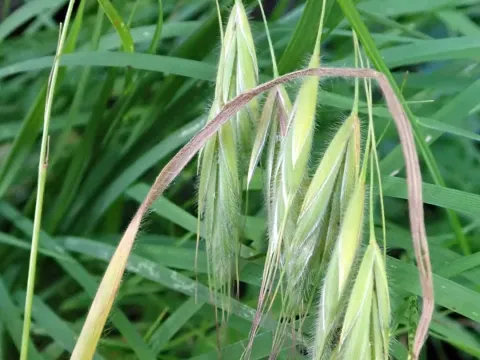
Sand brome
Bromus arenarius
Sowing sand brome is most successful during the early spring season, provided the soil retains sufficient moisture for germination. In temperate regions, autumn sowing can also be considered to allow the seeds to benefit from winter moisture.
What the section contains
Sand brome
Effective seedbed preparation is essential, requiring a fine, firm surface to ensure good seed-to-soil contact. Seeds should be sown at a shallow depth, typically 1-2 centimeters, to prevent exhaustion of the seedling before emergence.
When used in pasture mixtures, it should be drilled at a rate that allows companion legumes to establish alongside it. Proper spacing ensures that individual plants receive adequate nutrients without intense competition.
Rolling the soil immediately after sowing is a highly recommended practice to improve capillary action and moisture availability near the seeds. This step is particularly vital in sandy terrains where evaporation rates are high.
Seedlings typically emerge once soil temperatures stabilize above 8-10 degrees Celsius. Protecting the young plants from early weed pressure is necessary to ensure the stand becomes robust and productive for future seasons.
Sand brome (Bromus arenarius), a member of the Poaceae family, is a resilient grass species natively adapted to arid and sandy environments. Its biological structure is highly efficient for surviving in nutrient-poor, porous soils where other grasses struggle.
The species exhibits exceptional drought tolerance, utilizing an extensive root system to access deep water reservoirs. It is perfectly suited for land reclamation projects and restoring vegetative cover in degraded semi-arid landscapes.
It thrives in full sunlight and requires excellent soil aeration. It does not tolerate waterlogging or high humidity, as these conditions increase the risk of root diseases and decrease overall biomass quality.
While tolerant of low-fertility soils, sand brome responds well to strategic nitrogen applications during the onset of the growing season. This helps in biomass production, especially in areas managed for seasonal forage harvesting.
Temperature fluctuations are well-tolerated, with the plant exhibiting high resilience to the extreme day-night temperature differences common in desert and steppe ecosystems. It remains dormant during severe dry spells, recovering rapidly upon rehydration.
Fungal pathogens, particularly rusts and foliage spot diseases, represent the most significant threat to sand brome, especially if the canopy remains damp for extended periods. Proper site selection and ventilation are key preventative measures.
Insect pests such as cereal aphids and various grass-feeding flies can infest stands during the spring growth flush. Regular monitoring helps in determining if intervention is necessary to protect the plant health.
Overgrazing poses a serious risk to the long-term sustainability of sand brome stands. Allowing sufficient recovery time between grazing cycles is essential to prevent root depletion and maintain the density of the forage cover.
Competition from aggressive opportunistic weeds can overwhelm young stands. Implementing a managed mowing program can help suppress unwanted vegetation and favor the establishment of the brome grass.
Inappropriate crop rotation practices can lead to an accumulation of soil-borne pathogens. Rotating with non-grass species is advised to break the pest and disease cycle and improve the overall longevity of the field.