
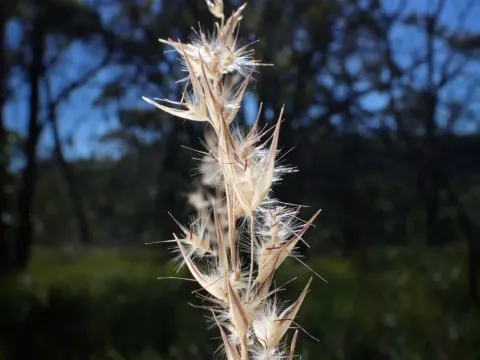
Rytidosperma
Rytidosperma
Rytidosperma is a genus of perennial grasses belonging to the Poaceae family, recognized for its resilience and adaptability in diverse environmental conditions. It is widely valued for its ability to thrive where other forage species may struggle.
What the section contains
 Bristly Wallaby Grass
Rytidosperma setaceum
Bristly Wallaby Grass
Rytidosperma setaceum
 Bristly wallaby grass
Rytidosperma setifolium
Bristly wallaby grass
Rytidosperma setifolium
 Red-anther wallaby grass
Rytidosperma pallidum
Rytidosperma biannulare
Rytidosperma biannulare
Red-anther wallaby grass
Rytidosperma pallidum
Rytidosperma biannulare
Rytidosperma biannulare
 Rytidosperma penicillatum
Rytidosperma penicillatum
Rytidosperma penicillatum
 Rytidosperma racemosum
Rytidosperma racemosum
Rytidosperma racemosum
 Wallaby grass
Rytidosperma semiannulare
Wallaby grass
Rytidosperma semiannulare
 Wallaby grass
Rytidosperma tenue
Wallaby grass
Rytidosperma tenue
Rytidosperma
Native primarily to Australia and New Zealand, these grasses have evolved to withstand harsh climatic fluctuations. Their natural distribution encompasses various habitats, from grasslands to open woodlands, demonstrating significant drought tolerance.
The crop prefers well-drained soils and shows a high level of performance on nutrient-poor sites. Its deep-reaching root system allows for efficient moisture uptake, making it an excellent candidate for semi-arid agricultural regions.
Climatic requirements are generally focused on temperate conditions with sufficient light intensity. Rytidosperma remains productive during dry spells, which is a key advantage for year-round forage supply in grazing systems.
Agronomic establishment requires careful attention to weed control, as seedlings tend to grow slowly in the early stages. Once established, however, the grass forms a dense and robust sward that effectively protects the soil surface.
The primary use of Rytidosperma is in pastoral systems, providing high-quality forage for livestock. It retains its nutritional value throughout various stages of maturity, ensuring consistent feed quality for grazing animals.
Yield stability is a major benefit of this genus, as it maintains biomass production over many years without the need for frequent reseeding. This longevity makes it an economically sound choice for long-term pasture investments.
In addition to forage production, Rytidosperma is increasingly used in land reclamation and soil stabilization projects. Its root structure helps improve soil integrity, effectively mitigating erosion in vulnerable ecosystems.
Proper management, including rotational grazing, is essential to maximize annual yields. By allowing the plants sufficient recovery time between grazing events, producers can ensure the persistence and vigor of the pasture.
The culture contributes to biodiversity in agricultural landscapes. Its integration into farm systems supports a more balanced ecological environment, reducing the reliance on high-input synthetic fertilizers.
Fungal diseases represent a significant threat to Rytidosperma, particularly in environments with high humidity or poor air circulation. Preventive management focuses on maintaining optimal plant density and field hygiene.
Common cereal and grass pests can affect plant development during the growing season. Integrated pest management strategies are recommended to monitor and address potential outbreaks before they impact biomass productivity.
Competition from weeds is most critical during the first year of growth. Using effective site preparation and selective mowing or herbicide application can prevent weeds from outcompeting the young grass seedlings.
Overgrazing poses a substantial risk to the health of the plant population. Maintaining a proper grazing schedule prevents the depletion of carbohydrate reserves in the roots, which is vital for the plant's winter survival and early spring regrowth.
Seed-borne pathogens and poor seed quality can lead to uneven stand establishment. Sourcing high-quality, certified seeds and implementing strict phytosanitary measures are key to establishing productive and disease-free stands.