

Reference · Crops
Ryegrass
Lolium L.
Sowing ryegrass (Lolium genus) is typically carried out in early spring or autumn. These periods provide the moderate temperatures and sufficient soil moisture necessary for rapid and uniform seed germination, which is critical for establishing a dense stand.
7
items
What the section contains
 Italian ryegrass
Lolium multiflorum Lam.
26 products
Italian ryegrass
Lolium multiflorum Lam.
26 products
 Perennial ryegrass
Lolium perenne L.
2 products
Perennial ryegrass
Lolium perenne L.
2 products
 Darnel
Lolium temulentum L.
Darnel
Lolium temulentum L.
 Flax darnel
Lolium remotum Schrank
Flax darnel
Lolium remotum Schrank
 Hybrid ryegrass
Lolium x hybridum Hausskn.
Westerwold ryegrass
Lolium multiflorum Lam. var. westerwoldicum Wittm.
Hybrid ryegrass
Lolium x hybridum Hausskn.
Westerwold ryegrass
Lolium multiflorum Lam. var. westerwoldicum Wittm.
 Wimmera ryegrass
Lolium rigidum Gaudin
Wimmera ryegrass
Lolium rigidum Gaudin
Marketplace
Products in this section · 12


Ryegrass
For pastures, the seeding rate generally ranges from 15 to 25 kg per hectare, depending on the desired density and local climate conditions. Ensuring a high seed-to-soil contact is essential for success in large-scale agricultural settings.
The seeds should be sown at a shallow depth of approximately 1–2 centimeters. Planting too deep can significantly reduce emergence rates, as the small seeds of ryegrass lack the energy reserves required to push through thick layers of soil.
Post-seeding management involves rolling the field to improve soil contact and moisture retention. This step is particularly important in sandy soils where dry conditions could otherwise hinder the establishment of the young plants.
Proper timing is vital for inter-seeding or overseeding existing pastures. Ryegrass is frequently used to revitalize worn-out fields, and doing so during early autumn allows it to compete effectively with older established grasses before winter dormancy.
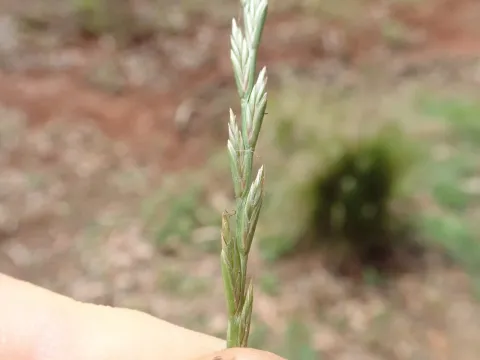
Ryegrass belongs to the Poaceae family and is recognized as one of the most productive grasses in temperate regions. It thrives in fertile, well-drained loamy soils and requires a consistent supply of nutrients to maintain its high yield capacity.
The plant is highly responsive to nitrogen fertilization, which directly correlates with the production of high-quality green biomass. Split applications of nitrogen are often recommended to maximize growth throughout the spring and autumn growing seasons.
Water requirements are significant, as ryegrass performs best in climates with reliable rainfall. While it can survive short dry spells, extended drought conditions will quickly decrease productivity and may lead to the thinning of the grass stand.
Ryegrass prefers a pH range between 6.0 and 7.0. Soils that are too acidic may require liming to improve nutrient availability, particularly for calcium and magnesium, which are essential for strong root development and overall plant vigor.
Despite its adaptability, ryegrass does not tolerate waterlogging. Poorly drained fields should be avoided, as stagnant water promotes root rot and reduces the competitiveness of the grass against weed species.
Yield potential of ryegrass is among the highest for forage grasses. Under intensive management, including proper fertilization and irrigation, it can produce multiple harvests or provide high-quality grazing for livestock.
Green biomass yields can range from 20 to 45 tonnes per hectare annually, depending on the cutting frequency and local growing conditions. Frequent harvesting at the boot stage helps maintain the high nutritional density of the forage.
The nutritional profile of ryegrass is exceptional, characterized by high levels of digestible protein and energy. This makes it a preferred choice for dairy cattle and sheep farmers looking to optimize milk production and weight gain.
For seed production, yields typically vary between 800 and 1,500 kg per hectare. Precision in harvesting time is critical, as seeds can drop easily if they become over-mature, leading to significant field losses.
The longevity of a ryegrass stand can be extended through careful grazing management, preventing overgrazing that damages the crown of the plant. A well-managed pasture can remain productive for several years before needing re-seeding.
Common diseases affecting ryegrass include crown rust, powdery mildew, and various leaf spot fungi. These diseases are most prevalent in humid conditions and can be mitigated by choosing resistant cultivars and avoiding overly dense plantings.
Pest problems are often associated with aphids, armyworms, and wireworms. Regular scouting of fields is necessary to detect early infestations and determine if chemical or biological control interventions are required to protect the stand.
Root diseases, often caused by soil-borne pathogens, can weaken plants and reduce their resistance to environmental stress. Maintaining soil health and avoiding continuous mono-cropping are key strategies for disease suppression.
Weed competition can be a major challenge during the establishment phase. Using high-quality, weed-free seed and implementing effective pre-seeding tillage or herbicide applications can help ensure a pure stand of ryegrass.
Integrated Pest Management (IPM) practices, including the preservation of beneficial insects and the use of targeted applications, help maintain a healthy ecosystem while minimizing the reliance on heavy chemical interventions.
Harvesting ryegrass for hay is ideally timed at the early flowering or boot stage. Harvesting at this point ensures the best balance between biomass quantity and protein content, resulting in high-quality feed for winter storage.
When cutting, the mowing height should be set to 5–7 centimeters. This height protects the plant's growing points and ensures a rapid regrowth cycle, which is essential for maximizing the total seasonal yield.
Drying the forage efficiently is paramount to preserving its nutritional value. Using tedders to turn the hay rows multiple times facilitates even moisture loss, which prevents fermentation and the loss of essential vitamins.
For seed crops, harvesting is performed when the seed head color changes and the moisture content drops to an optimal range. Combining the crop must be adjusted carefully to ensure clean seed with minimal damage to the kernels.
After the final harvest of the season, grazing livestock on the aftermath is a standard practice. This not only cleans up the field but also provides natural fertilization, which benefits the soil structure and nutrient levels for the next growth cycle.