
Salt couch grass
Sporobolus spicatus
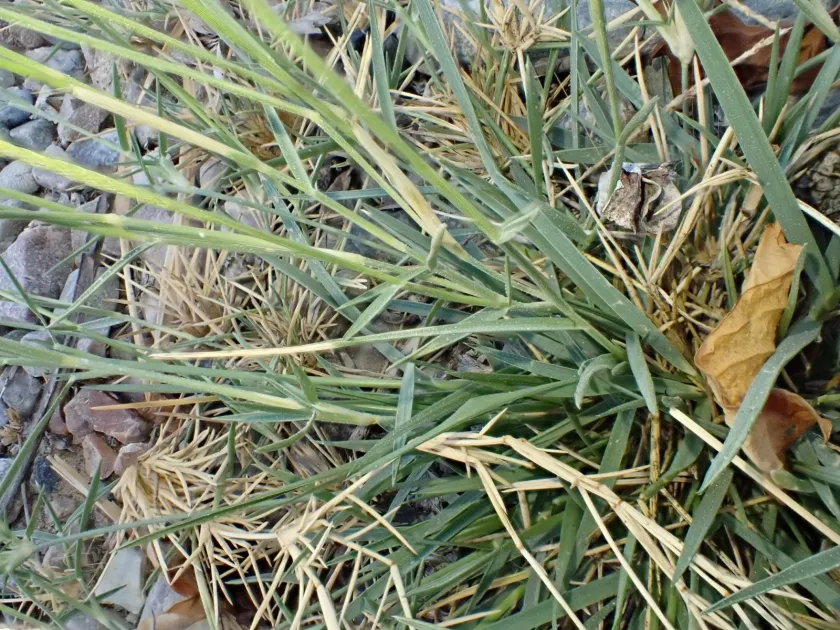
Description
Growing requirements
Salt couch grass (Sporobolus spicatus) is a perennial herbaceous plant belonging to the Poaceae family. It is a true halophyte, characterized by high tolerance to saline soils and the ability to thrive under conditions of extreme aridity.
The natural distribution range of the species covers arid regions of Africa, the Middle East, and parts of Asia. It serves as a key component of saline coastal ecosystems and desert basins where most conventional agricultural crops fail to establish.
Botanically, the plant is a dense, tufted grass with stiff, narrow leaves clustered in a basal rosette. Its inflorescence is a narrow, spike-like panicle, which gives the plant its distinct appearance and specific scientific name.
The species demonstrates exceptional adaptive mechanisms to climates with low precipitation and high ambient temperatures. It can survive prolonged periods of drought by maintaining a resilient root system that penetrates deep into the soil profile.
In terms of agronomy, the crop requires minimal intervention, though maintaining productivity for high-quality forage requires monitoring soil salinity levels and providing supplementary irrigation during the growing season. Its photosynthetic efficiency remains high even in saline soil solutions.
Harvesting
The agricultural value of Sporobolus spicatus is primarily found in its role as a pasture crop. In its native habitats, it is consumed by camels, sheep, and goats, providing essential grazing material where other fodder crops cannot be grown.
Beyond livestock grazing, the plant is utilized for land reclamation, specifically to stabilize shifting sands on saline sites. Its extensive root system prevents wind erosion and builds a durable sod layer that helps restore degraded areas.
Harvesting for hay should occur prior to the flowering stage to maximize protein content in the foliage. Because the tissues are naturally high in mineral salts, the forage is best utilized as a supplemental feed in mixed animal diets.
Research is ongoing into the plant's potential for phytoremediation, specifically its capacity to extract excess salts from damaged soil. This ability makes it a promising candidate for the biological restoration of saline agricultural land.
Seed harvesting presents a challenge due to the plant's natural seed dormancy, which requires specific pre-treatment to ensure high germination rates when propagating the species on a larger scale.