
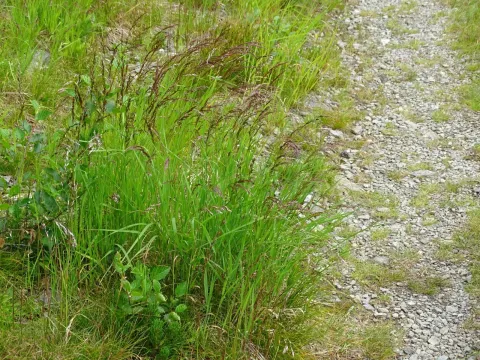
Agrostis agrostiflora
Agrostis agrostiflora
Agrostis agrostiflora is a perennial grass species typically cultivated for long-term pastures and meadows. The most favorable sowing time is early spring, ensuring that seedlings benefit from adequate soil moisture during their initial establishment phase.
What the section contains
Agrostis agrostiflora
Late autumn sowing is also a viable option, allowing seeds to remain dormant through the winter and germinate as soon as temperatures rise. Successful establishment depends on a firm, finely prepared seedbed to ensure proper soil-seed contact for the tiny seeds.
The seeds are very small, so shallow sowing depth of 1–2 cm is strictly recommended to prevent poor emergence. Using specialized small-seed drills ensures uniform distribution across the field, which is vital for developing a dense stand.
Seeding rates typically range from 8 to 12 kg per hectare, depending on local soil conditions and the intended density of the sward. Higher-quality seed lots are preferred to maximize the survival rate of young plants in the first year.
When included in seed mixtures with legumes, Agrostis agrostiflora serves as an excellent ground cover, stabilizing the soil and protecting against erosion while providing high-quality forage for livestock grazing.
This crop thrives in moderately moist to damp soils, making it an ideal choice for low-lying areas or sites with high water tables. It shows remarkable tolerance to temporary waterlogging during the spring melt season.
Agrostis agrostiflora adapts well to various soil types, ranging from loamy to slightly sandy conditions. It performs reasonably well in mildly acidic soils, providing farmers with a reliable option for fields that are otherwise difficult to manage.
The plant exhibits high cold tolerance, which is essential for survival in temperate and northern climates. It maintains growth stability across moderate temperature ranges, typically between +15 and +22 degrees Celsius.
While the plant prefers sunny environments, it demonstrates sufficient resilience to grow within mixed grass stands. Proper lighting is essential for maintaining dense sod, which discourages the invasion of weeds and unwanted annual grasses.
Optimizing nutrient availability is key to success; nitrogen-rich fertilizers applied during early growth stages stimulate biomass production, while phosphorus and potassium promote strong root development for long-term persistence.
Yields of green biomass for Agrostis agrostiflora are highly dependent on soil fertility and the frequency of harvesting. On average, farmers can expect between 150 and 250 quintals per hectare over a full growing season.
The species is highly valued for its regenerative capacity, allowing for multiple grazings or cuts without sacrificing long-term stand quality. Its ability to regrow rapidly after defoliation is a significant advantage for pasture rotation.
For hay production, harvesting timing is critical. Cutting the grass before the onset of the flowering stage ensures higher protein levels and better digestibility for livestock, compared to waiting for full maturity.
Seed production requires careful field management, as the reproductive shoots tend to mature unevenly. Harvesting in the wax-ripeness stage is essential to prevent excessive seed loss through shattering during machinery operations.
Long-term productivity is bolstered by combining grazing with periodic light fertilization, which keeps the stand vigorous and helps prevent the encroachment of undesirable woody species or weeds over several years.
The most common disease threats include various rust fungi and leaf spot pathogens, which typically flourish in high-humidity conditions. Frequent cutting or grazing is an effective management tool to reduce fungal spore loads.
Pest pressures often involve cereal flies that target seedlings and young shoots during the tillering stage. Aphid infestations may also occur during extended dry periods, potentially causing leaf yellowing and stunted growth.
Root rot diseases are more prevalent in compacted soils with poor drainage. Implementing field drainage improvements and following proper irrigation or grazing rotations helps maintain a healthy root environment and minimize risk.
Nematodes are another concern in specific regions, which can lead to reduced stand longevity. Integrated pest management, including crop rotation and the use of resistant grass varieties, remains the best approach to mitigation.
Early-season weed control is vital as Agrostis agrostiflora establishes slowly. Ensuring that the field is free of aggressive competitive weeds during the first months of life is crucial for a successful crop cycle.
Harvesting for hay should be completed before the grass reaches the full heading stage to maintain peak nutritional value. This balance between biomass volume and quality is essential for cost-effective livestock feed production.
Once mown, the grass should be raked into windrows to facilitate even drying. It is important to monitor moisture levels to avoid both mold growth from insufficient drying and leaf loss from over-drying the material.
Pasture usage requires disciplined rotation, allowing specific areas to rest and recover. This prevents overgrazing and ensures that the grass can accumulate energy reserves for continued growth throughout the season.
When harvesting seeds, direct combining during the window of wax maturity is standard. Post-harvest, seeds must be cleaned and dried immediately to achieve stable moisture levels for long-term storage.
Maintenance of the sward involves ensuring that residual stubble is not mown too short before winter, providing insulation and protection for the crown of the plants during the coldest months of the year.