
Agrostis juressii
Agrostis juressii
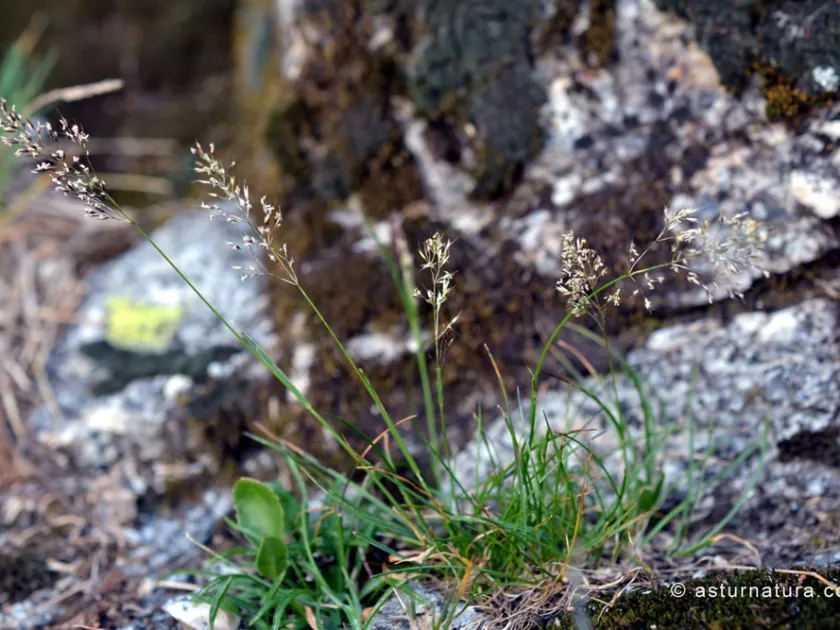
Description
Sowing dates
Agrostis juressii is a perennial grass species typically sown in early spring or late summer. Given its tiny seed size, precision in seedbed preparation is the most critical factor for successful establishment.
The soil surface must be finely pulverized and compacted before sowing. Seeds should be sown at a shallow depth of no more than 0.5–1 cm, followed by firming the soil to ensure optimal seed-to-soil contact.
The seeding rate varies depending on the intended use, whether for pastures or ground cover. Proper calibration of seeding equipment is essential to achieve a uniform distribution across the field.
Moisture availability during the initial germination phase is vital. If irrigation is not available, timing the sowing with predictable rainfall periods significantly increases the success rate.
Seedlings develop slowly during the initial weeks. Protecting the young stand from weed competition is crucial, as the grass needs time to establish a dense root system and start tillering.
Growing requirements
This species thrives in well-drained, moist soils with a slightly acidic to neutral pH. It is highly adaptable to various soil types, provided that waterlogging is not chronic.
Agrostis juressii shows excellent cold tolerance, making it suitable for regions with harsh winter conditions where snow cover provides insulation for the roots.
While the plant prefers open, sunny locations for maximum biomass production, it exhibits moderate shade tolerance, allowing it to survive in varied landscape environments.
Nutrient requirements are moderate; however, it responds positively to balanced fertilizer application, especially nitrogen, which helps in recovery after grazing or mowing.
The natural habitat of the species includes temperate zones where stable moisture levels during the growing season support its characteristic growth habit.
Yield
Primary use for Agrostis juressii is in long-term pastures and hayfields. It is prized for its ability to create a resilient, dense turf that stands up well to animal hoof traffic.
Forage productivity is highly dependent on grazing management. Rotational grazing helps maintain the nutritional quality and prevents the depletion of energy reserves in the plants.
Beyond its feed value, the species is effective for soil erosion control. Its extensive network of fine roots binds soil particles, making it ideal for slope stabilization projects.
The plant has a strong capacity for vegetative regrowth, allowing it to bounce back quickly after intensive utilization during the active growing season.
Long-term biomass output is optimized when the stand is maintained at an appropriate height, ensuring that the photosynthetic capacity remains high throughout the season.
Main diseases and pests
Fungal pathogens such as rust are common in this species, particularly when high humidity and stagnant air conditions persist during the mid-summer months.
Insect pests, including various species of grass flies and larvae that feed on roots, can pose a risk if the stand is stressed by poor management or drought.
Overgrazing is a significant threat to the longevity of the stand. Continuous high-intensity pressure can lead to thinning of the cover and invasion by opportunistic weed species.
Preventive management includes monitoring for early signs of disease and ensuring balanced fertility to keep the grass vigorous and less susceptible to infestations.
Integrated pest management strategies should be applied when thresholds are reached, ensuring that all interventions are compliant with agricultural safety standards.