
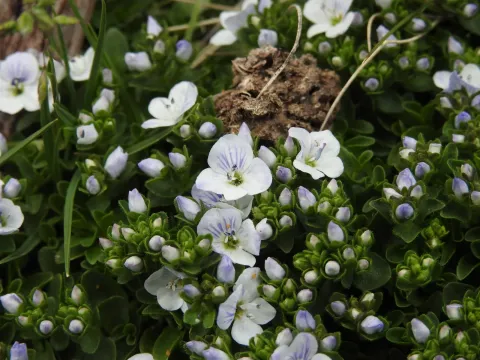
Creeping speedwell
Veronica repens
Creeping speedwell (Veronica repens) is a perennial herbaceous plant from the Plantaginaceae family. Originally native to the mountainous regions of Southwestern Europe, it thrives in cool, moist, and partially shaded natural environments.
What the section contains
Creeping speedwell
The plant is characterized by its prostrate stems that root at the nodes, forming a dense mat or ground cover typically reaching a height of only 5 to 10 centimeters. The leaves are small, oval, and often exhibit a distinct purplish hue, which adds visual interest to the garden landscape.
Cultivation requires fertile, well-drained, yet consistently moist loamy soils. Veronica repens is highly sensitive to drought conditions; therefore, when used in landscaping, it is essential to ensure regular watering, especially during the peak of the summer season.
It displays notable cold hardiness in temperate climates, though it may benefit from light protection during extreme winter conditions. The plant performs best in full sun to partial shade, where the light intensity helps maintain the rich coloration of its foliage.
The primary agricultural and horticultural application of this species is in garden design. It serves as an excellent ground cover, a lawn substitute for low-traffic areas, and an effective plant for filling gaps between stepping stones or stabilizing soil on gentle slopes.
The main threats to the plant include fungal diseases such as powdery mildew and various root rots, which are triggered by excessive moisture and poor air circulation. To manage these, it is recommended to space plants properly and ensure adequate drainage.
Pests, particularly slugs and aphids, can cause significant damage to the foliage in humid conditions. Standard horticultural practices, including the use of pest-specific treatments and keeping the area free of dense weeds, are effective methods for maintaining plant health.