
Cornut's Plantain
Plantago cornutii
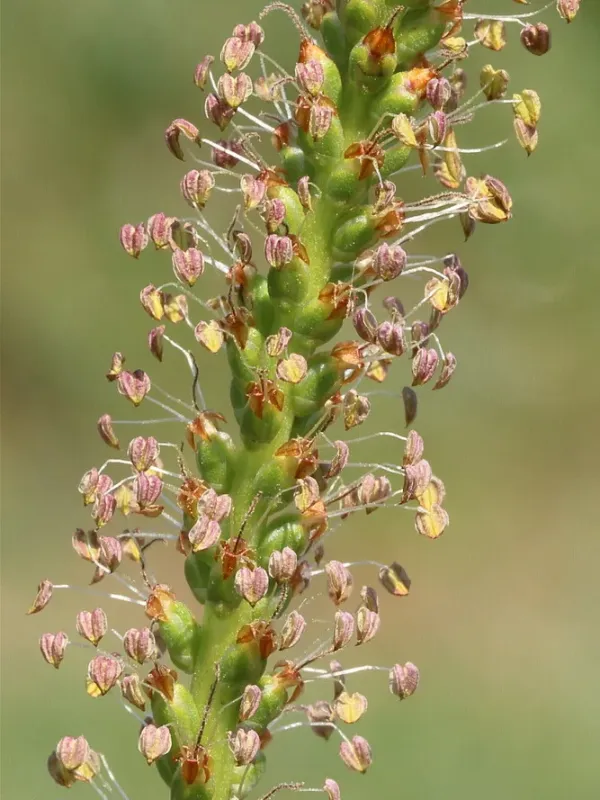
Description
Sowing dates
Sowing of Cornut's Plantain (Plantago cornutii) is primarily conducted in spring when soil temperatures reach 10–12°C. April is considered the optimal window for establishing plantations, as seeds require sufficient moisture for successful germination.
The seeds are small, necessitating shallow sowing at a depth no greater than 0.5–1 cm. Using rollers after sowing ensures better soil-to-seed contact, significantly increasing overall germination rates.
For late-autumn sowing, seeds undergo natural stratification, leading to earlier and more uniform emergence in early spring. However, this method requires selecting fields with minimal risk of seeds being washed away by snowmelt.
Seeding rates depend on harvesting methods and planting density, typically ranging from 2 to 3 kg per hectare. Row spacing is usually set at 45–60 cm to facilitate mechanical maintenance and weeding.
The plant demonstrates high regenerative capacity, allowing established plantations to be utilized for 3–5 years without the need for annual replanting, provided proper agrotechnical management is followed.
Growing requirements
Cornut's Plantain prefers open, well-lit areas, as shading reduces the concentration of biologically active compounds in the leaves. The species is highly adaptable, though it achieves peak productivity in regions with moderate moisture.
Soil requirements are moderate; the plant thrives best in fertile loamy and sandy-loam soils with a neutral pH. It is crucial to avoid areas with poor drainage, as the root system is sensitive to waterlogging.
The optimal pH range for cultivation is between 6.0 and 7.5. Incorporating organic fertilizers prior to plowing improves soil structure and nutrient levels, positively impacting the development of the leaf rosette.
This plant is characterized by high frost resistance, making it suitable for various climatic zones. Its drought tolerance is another significant biological advantage during the hot summer months.
Field maintenance includes regular cultivation of inter-rows to suppress weed growth and improve soil aeration. Young crops, in particular, require protection from weed competition during their initial growth phase.
Yield
The productivity of Cornut's Plantain depends on management intensity and the number of cuttings per season. Under favorable conditions, the crop can yield 3–4 harvests of commercial leaf mass annually.
Average dried mass yield ranges from 1.5 to 3 metric tons per hectare, depending on soil fertility and agrotechnical practices. Green mass yields can reach 15–20 tons, ensuring economic feasibility for pharmaceutical applications.
Timely application of mineral fertilizers, particularly nitrogen during the first half of the growing season, is crucial for stimulating leaf mass production. This supports vigorous growth of the rosette.
The biological potential of the species allows for stable yields even with minimal pesticide use. Large-scale production requires regular monitoring of plant growth phases and nutrient status.
Seed collection for commercial use or replanting is possible in the second year of growth. Seed production fields require specialized care and strict adherence to harvest timelines to prevent seed shattering.
Main diseases and pests
Primary phytopathological threats to Cornut's Plantain include fungal diseases such as powdery mildew and various types of leaf spot. High humidity and excessive planting density contribute to the spread of these infections.
Pest management focuses on leaf-eating insects and specific types of weevils that damage the rosette. Prevention strategies include crop rotation and spatial isolation from other members of the Plantaginaceae family.
To reduce disease risks, it is recommended to remove all crop residues from the field after the season ends, effectively disrupting the lifecycle of many pathogens and pests.
Chemical control must be applied with caution, given the plant's medicinal use. Priority is given to biological control agents and cultural practices that limit pest populations.
- Soil drainage monitoring to prevent root rot.
- Effective weed management during early growth stages.
- Regular scouting for leaf-eating pests in the rosette phase.
Harvesting
Leaf harvesting begins during the early flowering phase, when the concentration of beneficial compounds in the foliage reaches its peak. At this stage, leaves are succulent and suitable for high-quality processing.
Harvesting is performed either manually or mechanically during dry weather after morning dew has evaporated. It is important to cut leaves several centimeters above the ground to avoid damaging the plant's growth point.
Immediately after cutting, raw material must be sent for drying to prevent self-heating and loss of quality. Drying temperatures should not exceed 45–50°C to preserve biological activity.
Properly dried material retains its natural color and leaf structure. Storage should occur in well-ventilated areas using paper or cloth containers to prevent moisture accumulation.
Crop residues may be incorporated back into the soil as green manure if they are free from disease, thereby increasing soil fertility for subsequent crops in the rotation.